3 Common Myths About Psychiatric Medicines Debunked | Psychiatrist in Indore
Understanding Psychiatric Medicines
There are many misconceptions about psychiatric medicines, and these fears often delay treatment for anxiety, depression, and other mental health conditions.
Psychiatric medications are evidence-based treatments designed to help manage symptoms, improve daily functioning, and support recovery. Understanding the facts behind common myths can help individuals make informed decisions about treatment.
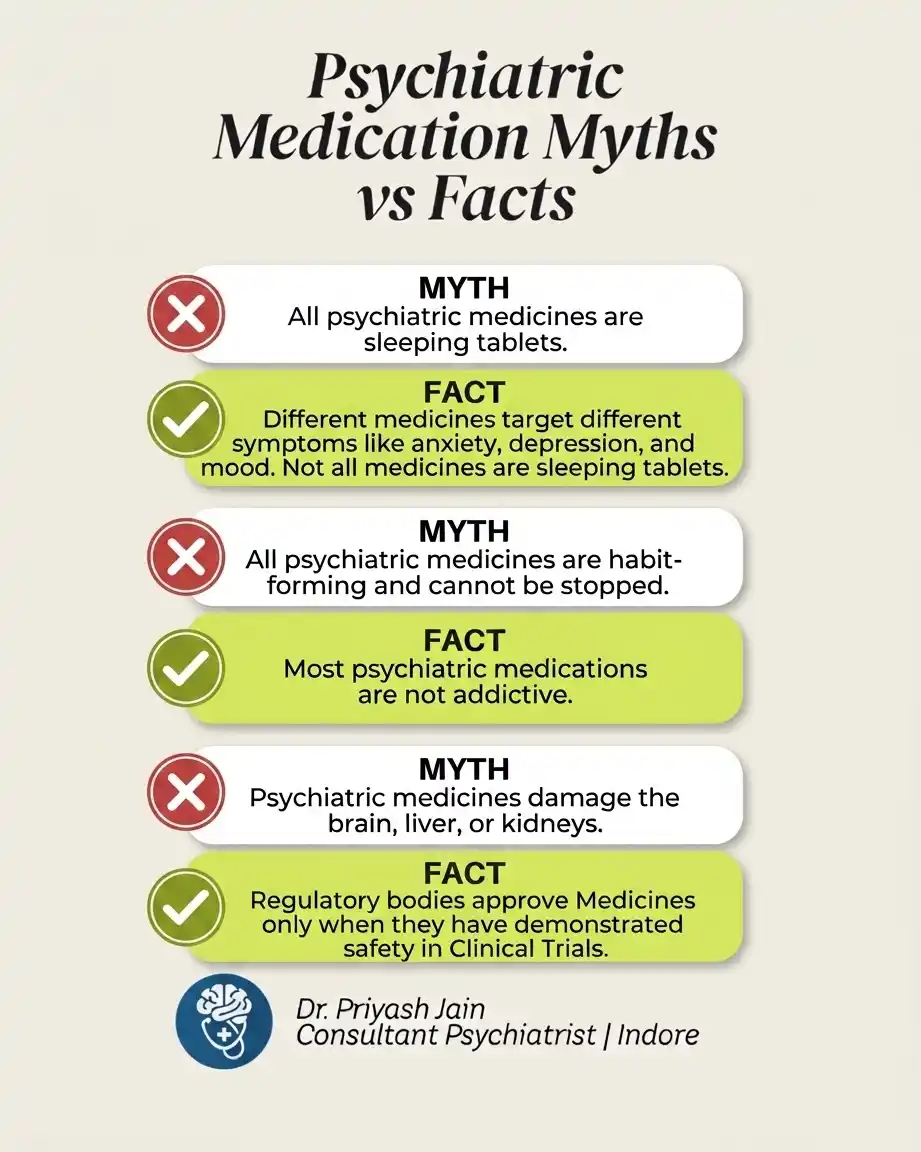
Myth 1: All Psychiatric Medicines Are Habit-Forming
Myth: Psychiatric medicines are addictive and cannot be stopped once started.
Fact: Most psychiatric medications are not addictive. Many are prescribed safely for a defined duration and can be gradually tapered under medical supervision when appropriate.
Stopping medicines suddenly without guidance may sometimes lead to problems, which is why regular follow-up is important during treatment.
Myth 2: All Psychiatric Medicines Are Sleeping Tablets
Myth: Psychiatric medicines only help with sleep.
Fact: Different medicines target different symptoms such as anxiety, depression, mood instability, obsessive thoughts, or psychosis. While some medicines may improve sleep, many are prescribed primarily to stabilise mood, reduce anxiety, and improve emotional well-being.
Learn more about anxiety symptoms and treatment .
Myth 3: Psychiatric Medicines Damage the Brain, Liver, or Kidneys
Myth: Psychiatric medicines permanently damage organs or the brain.
Fact: Psychiatric medicines are approved only after demonstrating safety and effectiveness in clinical studies. When prescribed appropriately and monitored regularly, these treatments are considered safe and evidence-based.
Doctors may recommend periodic monitoring depending on the medication and individual health profile to ensure safe treatment.
Why Addressing These Myths Matters
Avoiding treatment because of misinformation can prolong suffering and reduce quality of life. Anxiety, depression, and stress-related conditions are treatable, and early intervention often leads to better outcomes.
Delayed treatment may also increase the impact of symptoms on sleep, work, relationships, and overall functioning.
When to Seek Professional Help
Treatment decisions should be based on scientific evidence and professional evaluation rather than fear or stigma.
If you are considering anxiety treatment in Indore or looking for an anxiety doctor in Indore, understanding your options is the first step toward recovery.
Early treatment for depression and anxiety can improve long-term mental health and daily functioning.
Found this article helpful? Share it!
Need Expert Psychiatric Help?
Dr. Priyash Jain is here to help. Book a consultation today and take the first step towards better mental health.