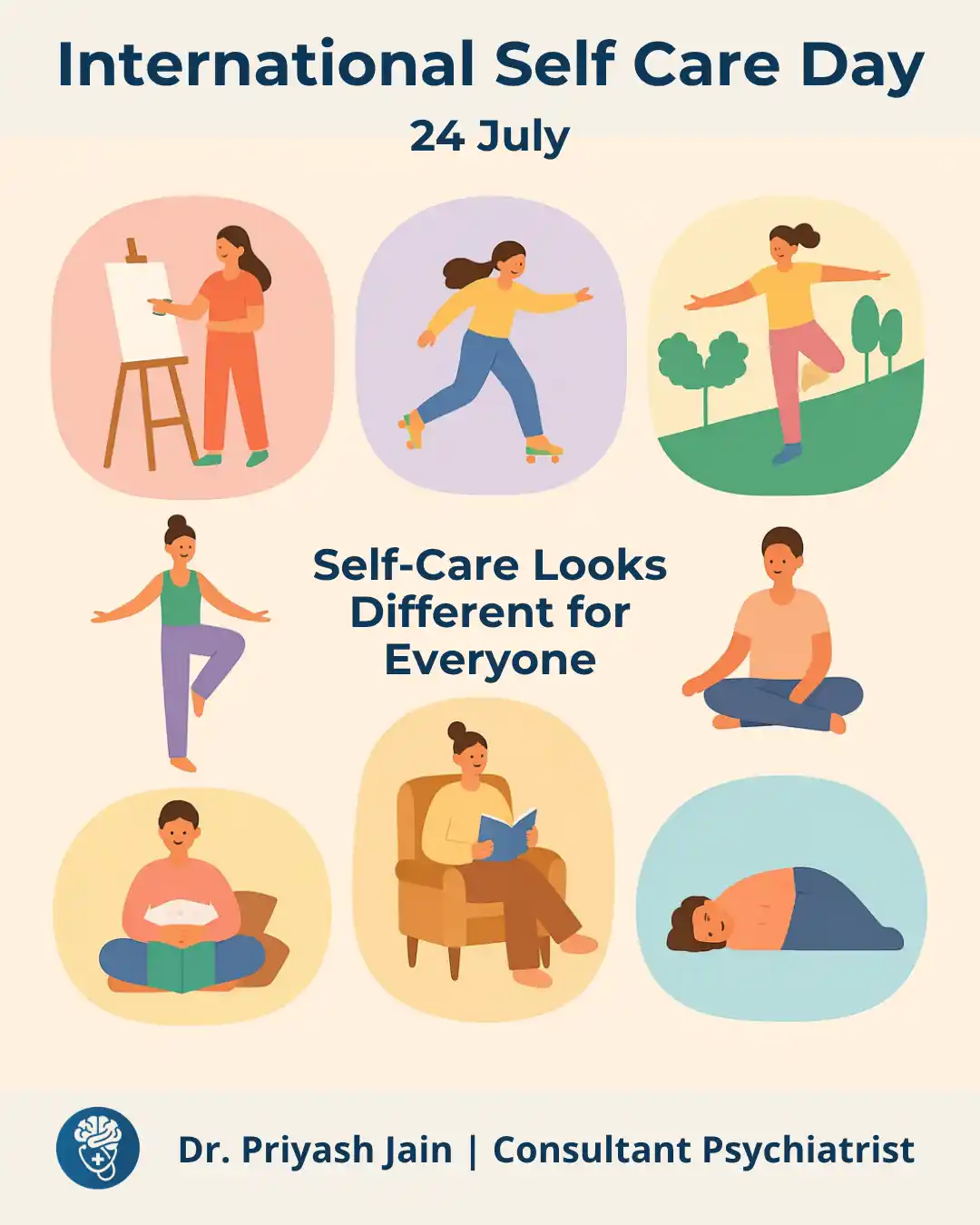
Every year on 24th July, International Self-Care Day reminds us to pause and reflect on one simple question: “How am I taking care of myself?”
For many of us, self-care has become synonymous with vacations, spa visits, or expensive indulgences. While these activities can certainly be enjoyable, true self-care is much less glamorous and far more consistent.
What Does Mental Health Really Mean?
Mental health is not merely the absence of depression, anxiety, or any other mental illness. It is a state of well-being that allows us to cope with life's stresses, realise our abilities, build meaningful relationships, work productively, and contribute to our communities.
Looking after our mental health, therefore, is something that benefits everyone, not just those living with a psychiatric illness.
What Does Mental Self-Care Actually Look Like?
So, what does mental self-care actually look like? It may be as simple as:
- Getting adequate sleep
- Taking regular meals
- Spending time with family or friends
- Limiting excessive screen time
- Taking short breaks during a busy day
- Engaging in regular physical activity
- Practising mindfulness or relaxation exercises
- Seeking professional help when emotional difficulties persist
The Overlooked Role of Creativity
One often overlooked aspect of self-care is creativity.
You do not need to be an artist, musician, or writer to benefit from creative pursuits. Drawing, singing, gardening, dancing, cooking, photography, journaling, playing a musical instrument, or even trying a new hobby can provide opportunities for emotional expression, improve resilience, reduce stress, and enhance overall well-being.
Self-Care Is Not Selfish
Self-care is also not selfish.
Just as we service our vehicles before they break down, caring for our mental health should not begin only when we feel overwhelmed. Small, consistent habits practised every day often have a greater impact than occasional grand gestures.
A Different Question to Ask Yourself
This International Self-Care Day, instead of asking, “How can I reward myself?” perhaps ask, “What is one small habit I can start today that my future self will thank me for?”
References and Sources
- World Health Organization. Self-Care Interventions for Health. WHO Health Topics. https://www.who.int/health-topics/self-care
- American Psychological Association. Taking Care of Your Mental Health. APA Topics. https://www.apa.org/topics/self-care
- World Health Organization. Mental Health: Strengthening Our Response. WHO Fact Sheets. https://www.who.int/news-room/fact-sheets/detail/mental-health-strengthening-our-response
Disclaimer: This article is for educational purposes and should not replace professional medical advice. If you are experiencing persistent emotional difficulties, please consult with a qualified healthcare professional.
Found this article helpful? Share it!
Need Expert Psychiatric Help?
Dr. Priyash Jain is here to help. Book a consultation today and take the first step towards better mental health.