You sit down to finish an important task, but your attention wanders. You reread the same paragraph, forget what you were about to do, or find yourself scrolling through your phone without realising how much time has passed.
A quick search suggests adult ADHD. The symptoms seem familiar, and suddenly, a possible explanation for years of procrastination and forgetfulness appears to have emerged.
Key Fact: Difficulty concentrating is a symptom, not a diagnosis. While Attention-Deficit/Hyperactivity Disorder (ADHD) can affect adults, several other conditions and everyday factors can produce remarkably similar difficulties.
Understanding the difference is the first step towards finding the right help.
What does adult ADHD actually look like?
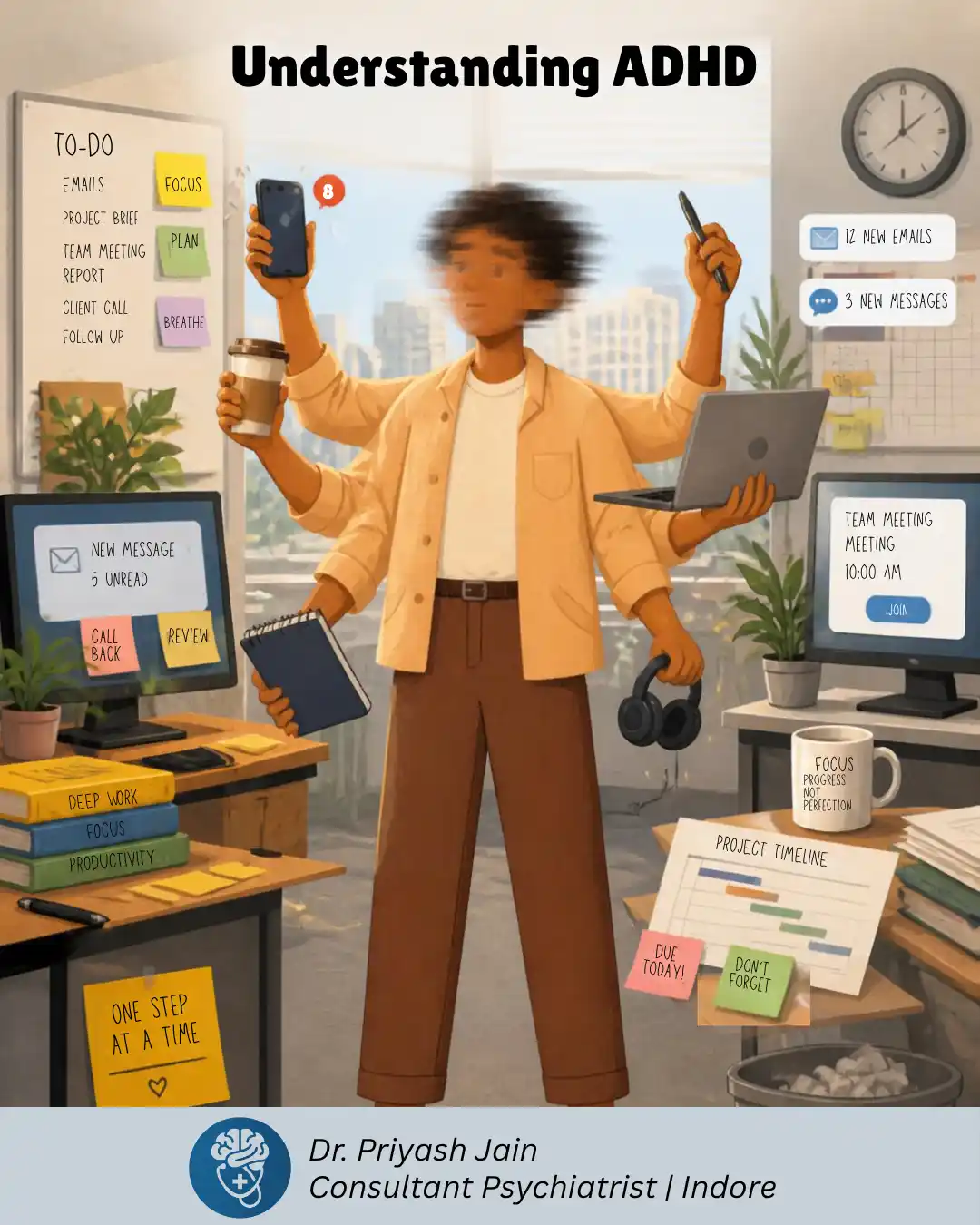
ADHD is a neurodevelopmental condition characterised by persistent patterns of inattention and/or hyperactivity-impulsivity that interfere with everyday functioning. Although commonly associated with childhood, symptoms can continue into adulthood, sometimes becoming more noticeable when academic, professional or family responsibilities increase.
In adults, ADHD may manifest as:
- Difficulty organising tasks and managing time.
- Frequently forgetting appointments or everyday responsibilities.
- Starting several tasks but struggling to complete them.
- Losing important belongings.
- Being easily distracted during conversations or work.
- Impulsive decisions or difficulty regulating restlessness.
However, experiencing a few of these symptoms does not automatically mean someone has ADHD. The pattern, duration, developmental history and impact on daily life matter.
Remember: A key diagnostic consideration is that ADHD symptoms must have been present during childhood, even if they were not recognised or diagnosed at the time. They should persist across different situations and cause meaningful difficulties in functioning.
What else can cause poor concentration?
Stress and mental overload
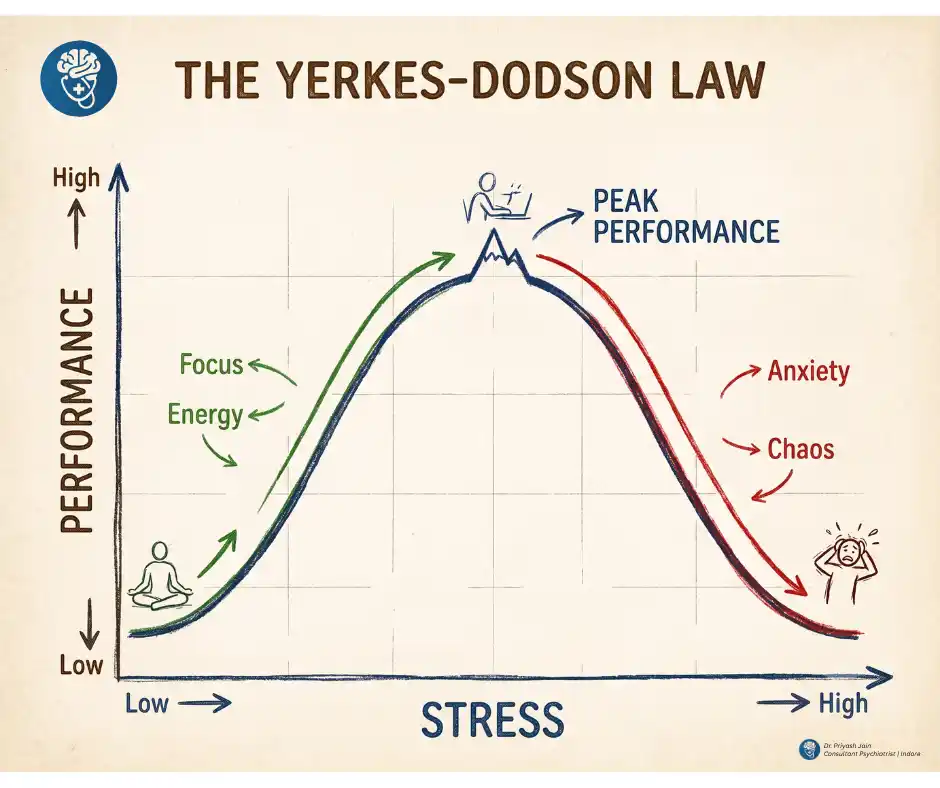
Deadlines, financial worries and competing responsibilities make it harder to focus on the task in front of you. If concentration improves when the pressure eases, the cause may need a different approach from ADHD treatment.
Anxiety
An anxious mind is preoccupied with worry about what might go wrong. A student before an exam may reread a page repeatedly, not from an inability to focus, but from fear of failure.
Depression
Depression is not only low mood. It can slow thinking, weaken memory and drain mental energy, especially when it comes with loss of interest, fatigue or changes in sleep and appetite.
Poor sleep
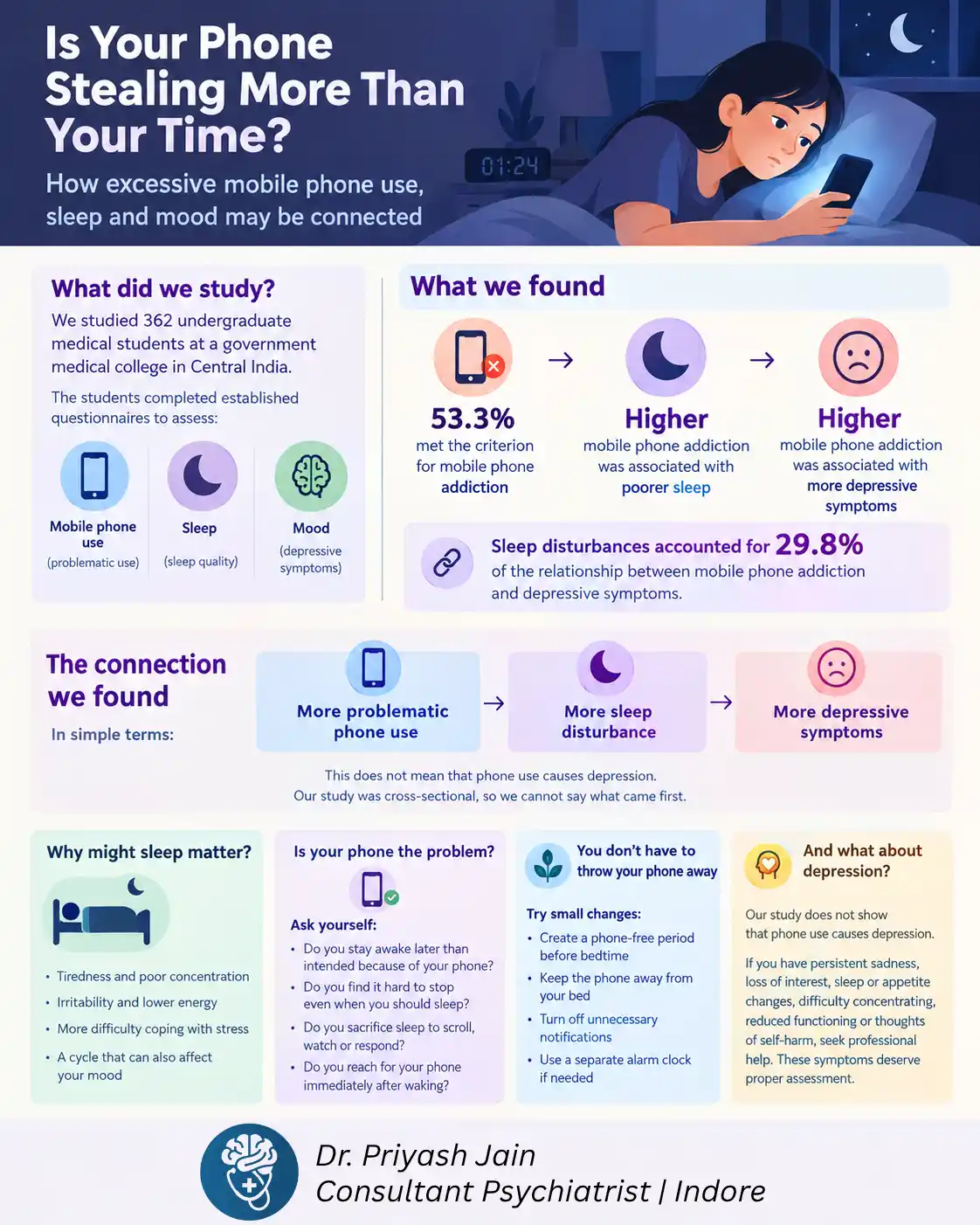
Too little or irregular sleep, and sleep disorders, can cause forgetfulness, irritability and poor concentration. If attention problems began after a period of poor sleep, sleep should be part of the assessment.
Digital distractions and lifestyle factors
Notifications, constant task-switching and habitual phone use fragment attention, as can heavy workloads, certain medications and physical health conditions. Persistent difficulties should not be dismissed as a lack of discipline.
How do psychiatrists distinguish ADHD from other causes?
A proper assessment goes beyond a symptom checklist or an online screening test. It considers the person's developmental history, current symptoms, functioning across different settings, mental health, sleep, medical history and, when appropriate, information from family members or old school records.
A psychiatrist also considers whether multiple conditions may be present together. For instance, a person may have ADHD alongside anxiety or depression. The goal is not simply to identify a label, but to understand what is contributing to the difficulties and plan appropriate care.
When should you seek professional help?
Consider consulting a mental health professional if concentration problems:
- Persist over time or are progressively worsening.
- Interfere with work, studies, relationships or everyday responsibilities.
- Are accompanied by persistent anxiety, low mood or sleep difficulties.
- Have led to repeated difficulties despite genuine efforts to improve.
- Are significantly affecting your confidence or quality of life.
You do not need to be certain that you have ADHD before seeking an assessment. In fact, uncertainty about the cause is one of the reasons a professional evaluation can be useful.
The right diagnosis begins with the right question
Instead of asking only, "Do I have ADHD?", it may be more helpful to ask, "What is affecting my ability to concentrate, and what can I do about it?"
The distinction matters because the same symptom can arise from very different causes, each requiring a different approach. Accurate assessment can help avoid unnecessary treatment, identify overlooked difficulties and guide you towards meaningful improvement.
If you are experiencing persistent problems with attention, focus or forgetfulness, a consultation with a psychiatrist in Indore can help clarify the underlying cause and identify suitable treatment options.
Seeking help is not about finding a label. It is about understanding yourself better and getting the support you need.
References and Sources
- National Institute for Health and Care Excellence (NICE). Attention deficit hyperactivity disorder: diagnosis and management (NG87). NICE guideline. 2018, updated 2019. https://www.nice.org.uk/guidance/ng87
- Centers for Disease Control and Prevention (CDC). ADHD in Adults. CDC. Updated June 2026. https://www.cdc.gov/adhd/about/adhd-in-adults.html
- National Institute for Health and Care Excellence (NICE). Digital technologies for assessing attention deficit hyperactivity disorder (ADHD) (DG60). NICE diagnostics guidance. 2024. https://www.nice.org.uk/guidance/dg60
- American Academy of Neurology. "Do I Have ADHD?": Diagnosis of ADHD in Adulthood and Its Mimics in the Neurology Clinic. Neurology: Clinical Practice. 2025;15(1):e200433. https://www.neurology.org/doi/10.1212/CPJ.0000000000200433
- Harvard Health Publishing. Concentration & Focus. Harvard Health Publishing, Harvard Medical School. https://www.health.harvard.edu/topics/concentration-focus
This article is for educational purposes only and is not a substitute for professional medical advice, diagnosis or treatment. If you are concerned about your attention, concentration or mental health, please consult a qualified mental health professional.
Found this article helpful? Share it!
Need Expert Psychiatric Help?
Dr. Priyash Jain is here to help. Book a consultation today and take the first step towards better mental health.