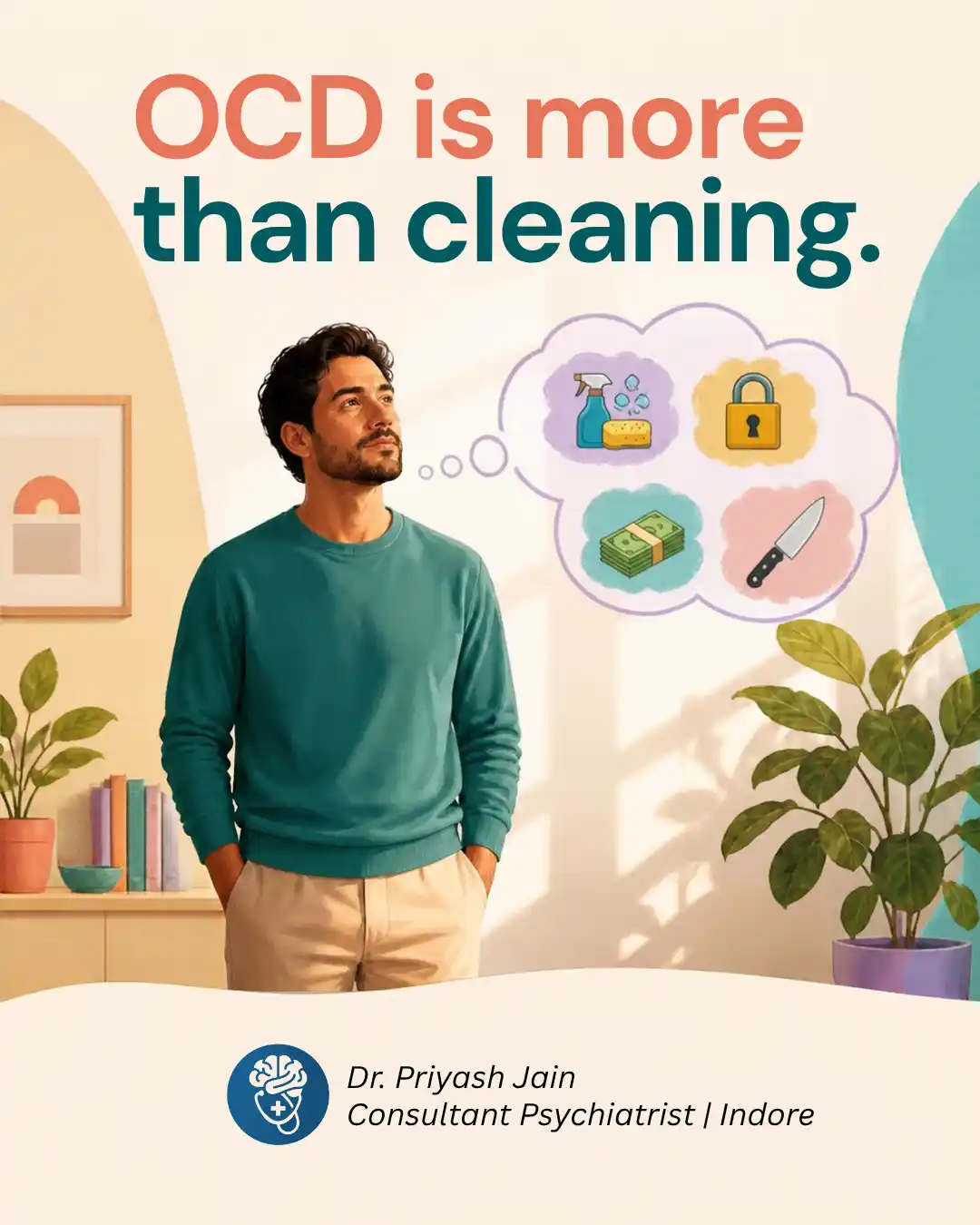
When people hear the term Obsessive-Compulsive Disorder (OCD), they often imagine someone washing their hands repeatedly, arranging objects symmetrically, or keeping their surroundings excessively clean. While these are recognised symptoms of OCD, they represent only a fraction of what the condition can look like.
For many individuals, OCD is an invisible struggle involving disturbing thoughts, persistent doubts, mental rituals, and an overwhelming need for certainty. Understanding these less familiar symptoms is essential for recognising OCD early and seeking appropriate treatment.
What is Obsessive-Compulsive Disorder?
OCD is a mental health condition characterised by obsessions, compulsions, or both, which cause significant distress or interfere with everyday functioning.
- Obsessions are recurrent, unwanted thoughts, images, or urges that cause anxiety or discomfort.
- Compulsions are repetitive behaviours or mental acts that a person feels driven to perform to reduce distress or prevent a feared event.
Although compulsions may provide temporary relief, this relief reinforces the cycle, making the thoughts and behaviours more persistent over time.
Key Fact: People with OCD often recognise that their fears or rituals may be excessive, yet find it extremely difficult to resist them.
OCD is not always about cleaning
OCD can present in several ways, many of which are frequently misunderstood.
Contamination fears and excessive washing
The most widely recognised presentation, involving fear of germs, dirt or chemicals and repeated washing or avoidance. The defining feature is not cleanliness itself but the distressing fear and the repetitive behaviour used to manage it.
Checking and doubt
Persistent doubt about whether the door is locked, the gas is off or a document was submitted correctly. Even after checking repeatedly, the person may struggle to feel certain.
Intrusive and unwanted thoughts
Distressing thoughts related to violence, sexuality, religion, morality or causing harm. They are often the opposite of the person's intentions and beliefs, which makes them particularly upsetting.
Symmetry, ordering and feeling "just right"
A compulsion to arrange objects in order or repeat actions until they feel complete. Unlike ordinary neatness, this can consume considerable time and cause distress when interrupted.
Mental compulsions
Silent rituals such as repeating prayers, counting, mentally reviewing conversations or seeking reassurance within one's own mind. Because they are internal, they can go unrecognised for years, even by the person experiencing them.
Remember: Having an intrusive thought does not mean that a person wants to act on it or that it reflects their character. Such thoughts are a recognised feature of OCD and should be explored without judgement.
When does a habit become OCD?
Being particular about cleanliness, double-checking things, or preferring order does not automatically indicate OCD.
The distinction lies in the nature of the experience and its impact on daily life. OCD becomes a clinical concern when obsessions and compulsions are difficult to control, cause significant distress, consume excessive time, or interfere with work, relationships, education, or routine activities.
A person who enjoys keeping their home clean is different from someone who feels compelled to clean repeatedly because of overwhelming fears of contamination. Similarly, occasional doubts are normal. Spending hours checking, seeking reassurance, or mentally reviewing events is not simply a personality trait.
Can OCD be treated?
Yes. OCD is a treatable mental health condition, and effective interventions are available. Treatment generally involves one or both of the following:
- Cognitive Behavioural Therapy (CBT), particularly Exposure and Response Prevention (ERP): This evidence-based psychological treatment helps individuals gradually confront feared situations or thoughts while learning to resist compulsive responses. Over time, this can reduce anxiety and weaken the obsessive-compulsive cycle.
- Medication: Selective Serotonin Reuptake Inhibitors (SSRIs) are commonly prescribed for OCD. The choice of medication, dosage, and duration depends on symptom severity, previous treatment response, individual needs, and clinical assessment.
For individuals with more severe symptoms, a combination of medication and structured psychotherapy may be recommended. Treatment should be tailored to the person rather than based on a one-size-fits-all approach.
When should you consult a psychiatrist?
Consider seeking professional help if repetitive thoughts or behaviours:
- Are causing distress.
- Consume significant time.
- Disrupt daily activities.
- Affect your relationships and quality of life.
Early recognition can prevent years of unnecessary suffering. With appropriate treatment and support, many individuals with OCD experience substantial improvement and regain control over their daily lives.
If you or someone you know is struggling with persistent intrusive thoughts, repetitive behaviours, or excessive doubts, consulting a mental health professional can be an important first step.
References and Sources
- National Institute of Mental Health (NIMH). Obsessive-Compulsive Disorder (OCD). NIMH, National Institutes of Health. https://www.nimh.nih.gov/health/topics/obsessive-compulsive-disorder-ocd
- Indian Psychiatric Society (Arumugham SS, et al.). Clinical practice guidelines for obsessive-compulsive disorder: 2025 update. Indian Journal of Psychiatry. 2026;68(1):44-67. https://pmc.ncbi.nlm.nih.gov/articles/PMC12900050/
- National Institute for Health and Care Excellence (NICE). Obsessive-compulsive disorder and body dysmorphic disorder: treatment (CG31). NICE guideline. https://www.nice.org.uk/guidance/cg31/chapter/Recommendations
This article is for educational purposes only and is not a substitute for professional medical advice, diagnosis or treatment. If you are concerned about obsessive thoughts, compulsive behaviours or your mental health, please consult a qualified mental health professional.
Found this article helpful? Share it!
Need Expert Psychiatric Help?
Dr. Priyash Jain is here to help. Book a consultation today and take the first step towards better mental health.