Stress Management Tips | Psychiatrist in Indore
Managing Stress for Better Mental Health
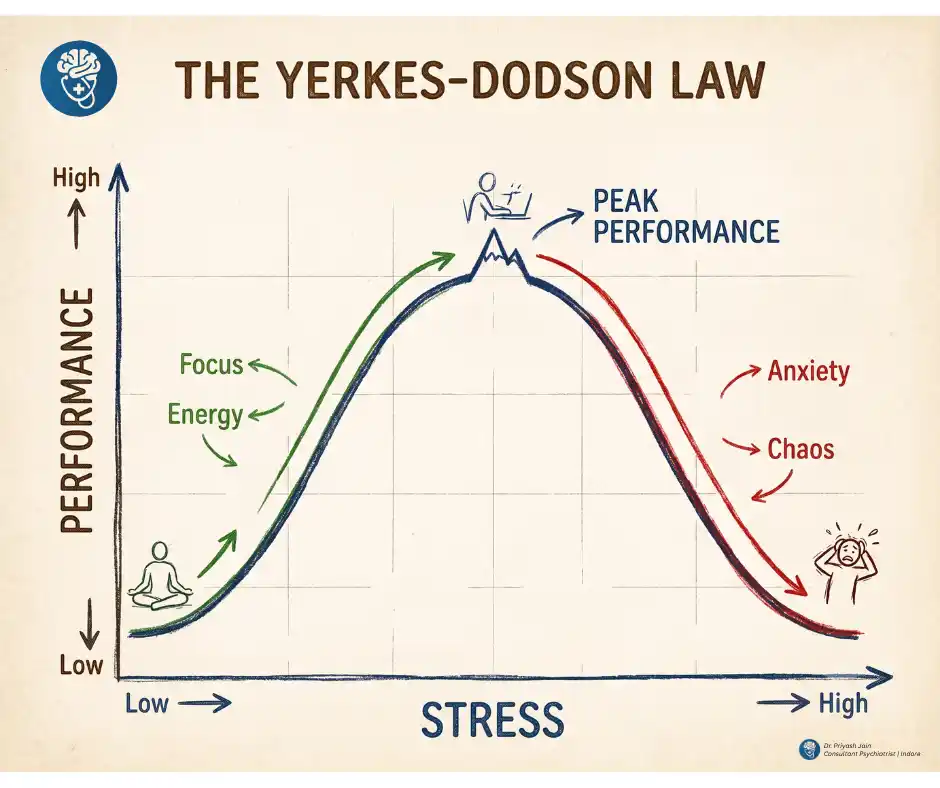
Stress is a part of everyday life, but managing it effectively is essential for maintaining both mental and physical well-being.
Simple Strategies to Manage Stress
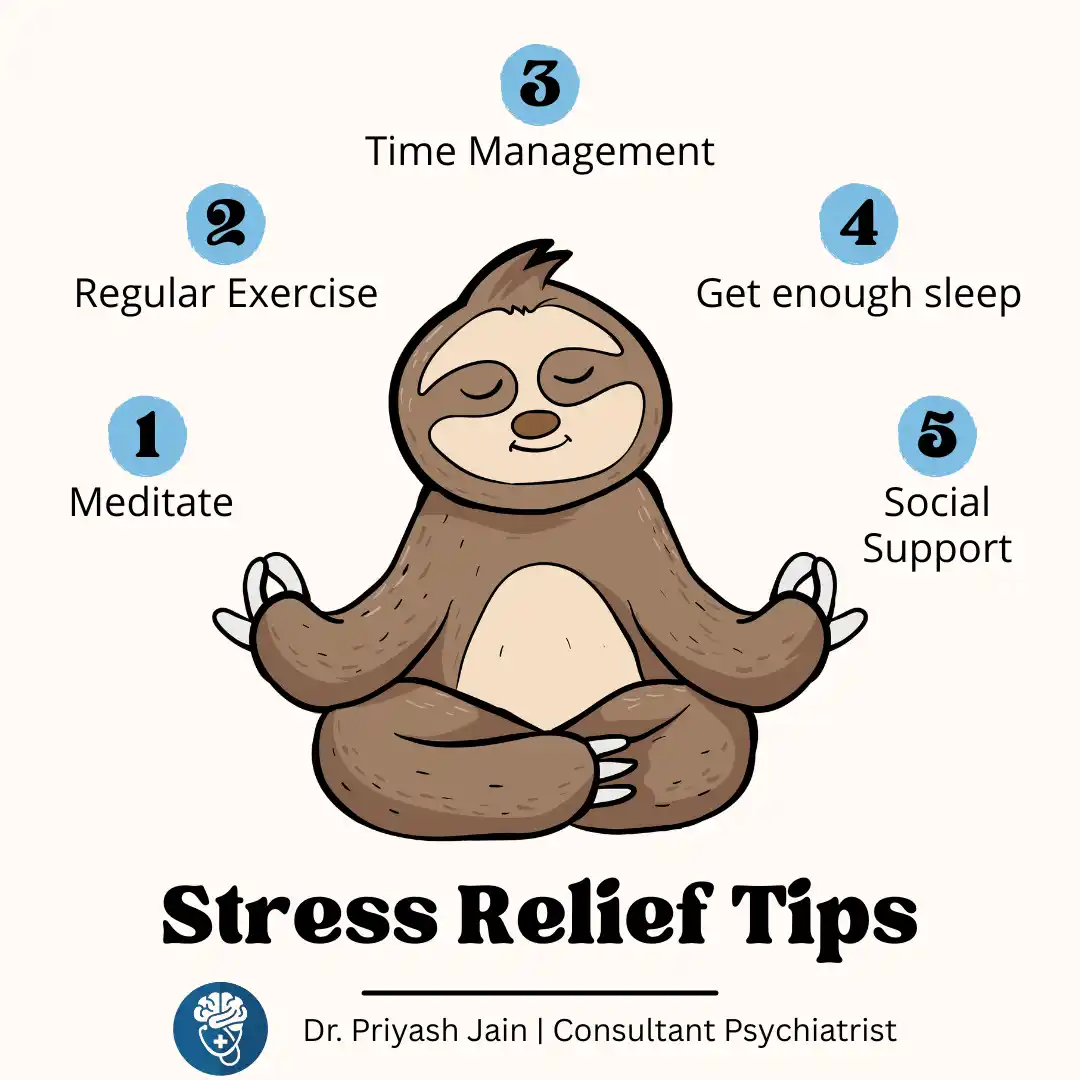
Adopting healthy habits can significantly reduce stress levels:
- Time management
- Regular physical activity
- Balanced and nutritious diet
- Adequate sleep
- Engaging in hobbies and leisure activities
- Relaxation techniques such as mindfulness or deep breathing
- Seeking social support
When Stress Becomes a Concern
Persistent or overwhelming stress can begin to affect:
- Mood and emotional stability
- Sleep patterns
- Concentration and productivity
- Overall quality of life
If left unaddressed, it may increase the risk of anxiety disorders, depression, or burnout.
When to Seek Help
If stress is ongoing or interfering with daily functioning, professional support can help in understanding triggers and developing effective coping strategies.
Learn more about the difference between stress and depression .
Frequently Asked Questions
What are the common symptoms of stress?
Common symptoms include irritability, fatigue, sleep disturbances, difficulty concentrating, muscle tension, and feeling overwhelmed.
Can stress lead to mental health disorders?
Yes, prolonged or unmanaged stress can increase the risk of anxiety disorders, depression, and burnout.
How can I manage stress at home?
Maintaining a routine, regular exercise, proper sleep, relaxation techniques, and staying connected with supportive people can help manage stress.
When should I consult a psychiatrist for stress?
You should seek professional help if stress persists for weeks, affects daily functioning, or leads to symptoms like anxiety, low mood, or sleep problems.
Found this article helpful? Share it!
Need Expert Psychiatric Help?
Dr. Priyash Jain is here to help. Book a consultation today and take the first step towards better mental health.