When Is Normal Student Stress Actually a Mental Health Problem?
Exams are approaching. Assignments are piling up. There is pressure to perform, uncertainty about the future, and perhaps a constant stream of messages and notifications competing for attention.
Some amount of stress is a normal part of being a student. In fact, a certain amount of stress can actually improve performance.
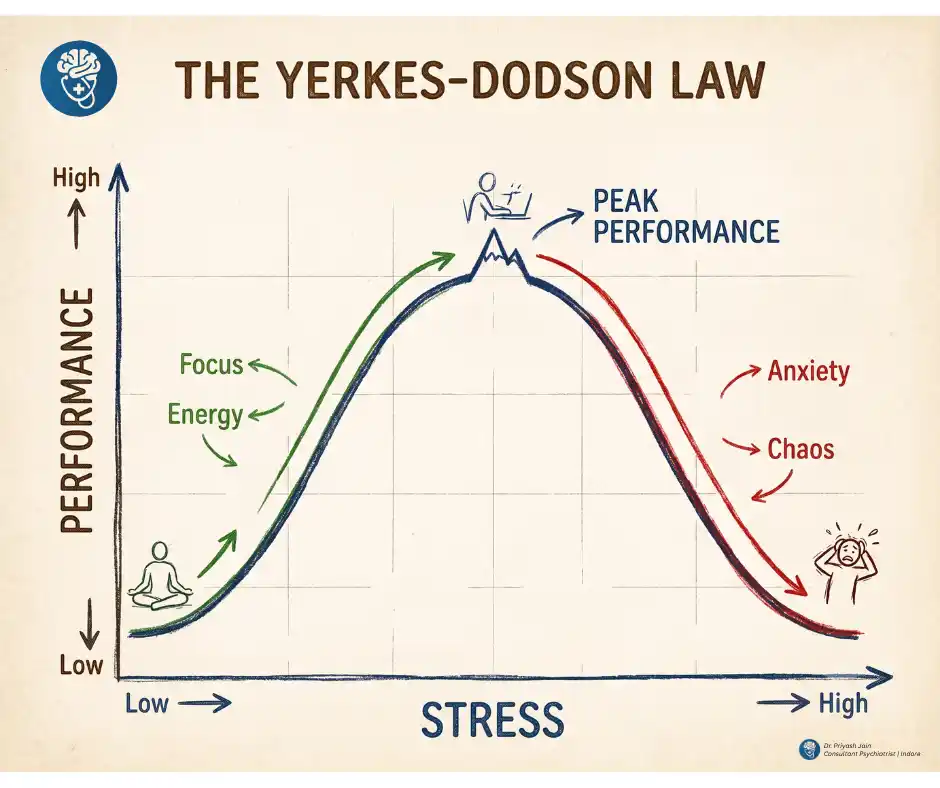
The Yerkes-Dodson Curve: Why Some Stress Helps
This idea is illustrated by the Yerkes-Dodson curve, a psychological model that describes the relationship between arousal and performance. When arousal is very low, we may lack motivation and alertness. As arousal increases, performance generally improves until it reaches an optimal point. Beyond that point, however, too much stress and anxiety can cause performance to decline.
Too little stress means low motivation. Moderate stress means better focus and performance. Too much stress means impaired concentration and performance.
This is why feeling nervous before an examination is not necessarily a sign of a mental health problem. But when does normal student stress become a mental health problem?
The answer is not simply "when you feel stressed." What matters is how intense the stress is, how long it lasts, and whether it starts interfering with your everyday life.
What Is Normal Student Stress?
Student life naturally comes with challenges. Exams, deadlines, academic competition, presentations, relationships, financial concerns, and decisions about careers can all create temporary stress.
Normal stress often has a clear trigger and tends to improve when the situation is resolved. You might feel anxious before an exam, lose some sleep the night before a presentation, or feel overwhelmed during a particularly busy week. Once the exam is over or the deadline passes, you gradually return to your usual routine.
You can still study, eat, sleep, meet friends and enjoy things you normally enjoy, even if you are under pressure. Stress becomes more concerning when it stops being a temporary response to a difficult situation and starts affecting your ability to function.
5 Signs That Stress May Be Becoming a Mental Health Problem
It Is Affecting Everyday Functioning
Ask yourself if you are still able to do the things you normally need to do, such as attending classes, studying, and maintaining basic self-care.
Sleep Is Consistently Disrupted
One or two late nights before an exam is normal. Persistent difficulty sleeping, or a completely disrupted sleep schedule, is a sign worth attention.
You Have Stopped Enjoying Things
Stress can make you tired, but you should still enjoy something occasionally. Gradually losing interest in things you once enjoyed can signal more than academic stress.
Thoughts Are Hard to Control
Some worrying before an exam is normal. Constant, uncontrollable thoughts of failure that persist even away from your studies may signal an anxiety problem.
Unhealthy Ways of Coping
Pay attention to how you manage stress, not only how stressed you feel. Withdrawal, substance use, or excessive escapism are important warning signs.
Self-harm or thoughts of suicide are particularly important warning signs and should never be dismissed as "just exam stress."
What About Exam Anxiety?
Feeling nervous before an examination is extremely common. Your heart may beat faster, your palms may sweat, and you may feel butterflies in your stomach. This is the body's normal stress response.
The problem arises when anxiety becomes so intense that it prevents you from studying, attending the examination, or performing despite adequate preparation. Severe exam anxiety may also be part of a broader anxiety problem and deserves professional assessment if it is persistent or significantly affecting your life.
A Simple Way to Think About It
Instead of asking "Am I stressed?", ask "Is my stress interfering with my life?" Look at four things:
- Duration: Has it been going on for weeks?
- Intensity: Is it much stronger than what the situation would normally produce?
- Functioning: Is it affecting studies, sleep, relationships, or self-care?
- Control: Can you still switch off and recover when the stressful situation passes?
The more of these questions you answer with "yes," the more worthwhile it is to seek help.
When Should a Student Seek Professional Help?
You do not have to wait until things become unbearable. Consider talking to a mental health professional if stress, anxiety, or low mood is persistent, getting worse, interfering with your studies or relationships, or making it difficult to manage everyday life.
If you are experiencing thoughts of self-harm or suicide, seek immediate professional help and tell someone you trust rather than dealing with it alone.
Mental health problems in students are common and treatable. Seeking help is not an admission of failure. It is a way of understanding what is happening and learning how to manage it.
Looking for a Psychiatrist in Indore?
If you or your child is struggling with persistent academic stress, anxiety, low mood, sleep problems, or difficulty coping with student life, a psychiatric evaluation can help determine whether the problem is ordinary stress or something that requires treatment.
Student life can be stressful. But struggling silently should not be a requirement of being a student.
This article is intended for general educational purposes and is not a substitute for professional medical advice. If you or a student in your family is struggling with stress, anxiety, or low mood, please consult a qualified psychiatrist.
Found this article helpful? Share it!
Need Expert Psychiatric Help?
Dr. Priyash Jain is here to help. Book a consultation today and take the first step towards better mental health.