Understanding Mania and Bipolar Disorder: When Mood Becomes an Illness
Have you ever met someone who seemed unusually energetic, talked non-stop, slept only a few hours, and appeared convinced that nothing could go wrong? Everyone has periods of feeling happy or excited. But sometimes these changes are so intense that they signal a medical condition rather than simply a good mood. This state is called mania, and it is one of the defining features of bipolar disorder.
As a Consultant Psychiatrist practising in Indore, I frequently see families who are confused, exhausted, and worried after watching a loved one go through such an episode. This article explains what mania is, how it presents, how bipolar disorder is treated, and why early recognition makes such a significant difference.
What is Bipolar Disorder?
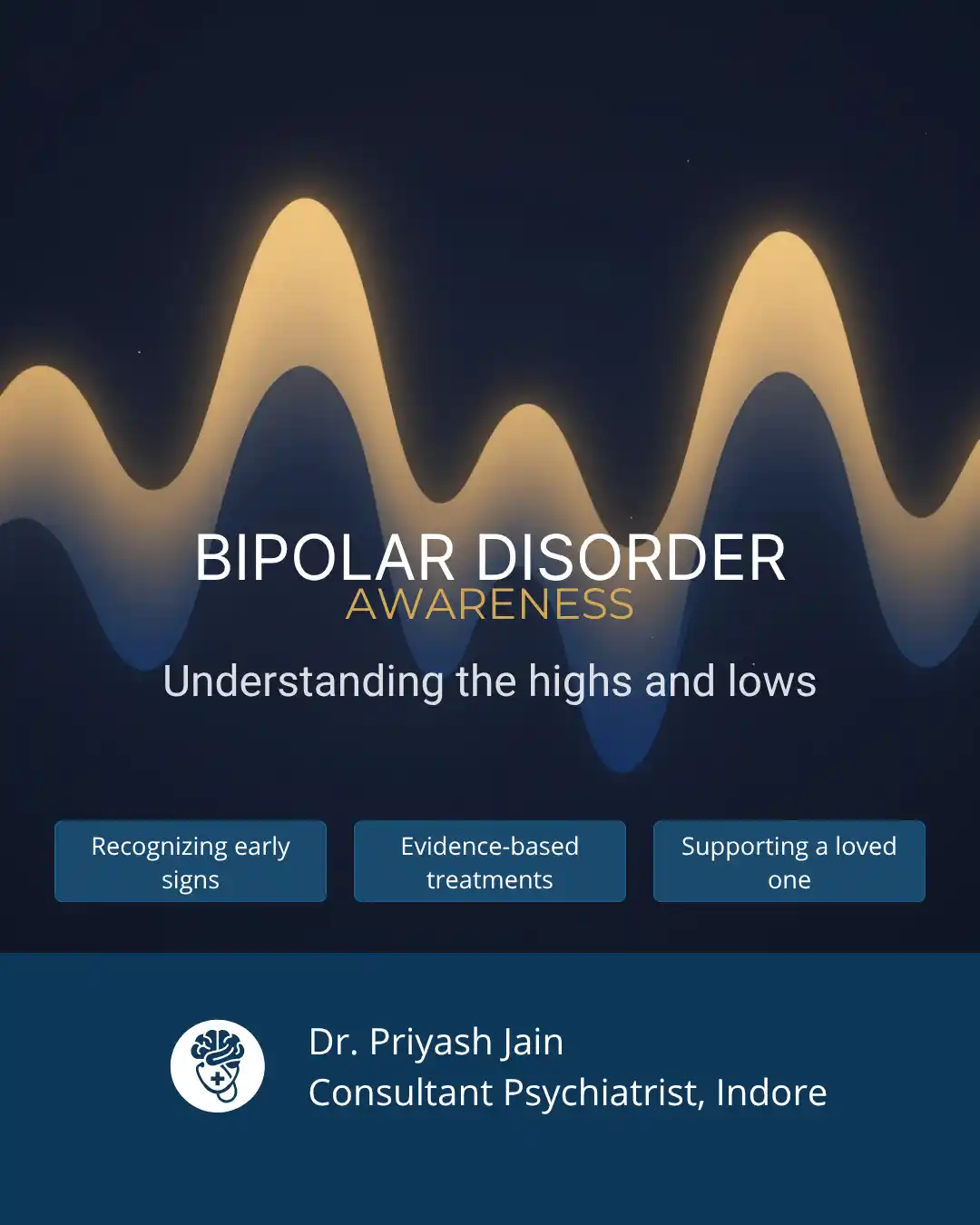
Bipolar disorder is a mental health condition marked by episodes of abnormally elevated mood (mania or hypomania) alternating with episodes of depression. Between these episodes, many people return to their usual level of functioning.
The illness affects millions of people worldwide and occurs across all walks of life — including artists, scientists, entrepreneurs, and world leaders.
What is Mania?
Mania is a state of persistently elevated, expansive, or irritable mood accompanied by a surge in energy and activity. The change is obvious to family and friends and is severe enough to impair social or occupational functioning. In many cases, hospitalisation becomes necessary to keep the person safe.
A manic episode typically lasts at least one week, though untreated episodes can continue for several weeks or even months.
Symptoms of Mania
The symptoms of mania go far beyond simply feeling happy. Below is a quick visual reference to the most common features clinicians look for.
Elevated or Irritable Mood
Unusually cheerful, euphoric, and overly confident — or, in some, extremely irritable and argumentative.
Increased Energy
A feeling of endless energy, often leading to multiple projects taken on at once without tiring.
Decreased Need for Sleep
Someone who usually sleeps 7–8 hours may manage on 2–3 hours for several nights and still feel energetic.
Excessive Talking
Speech becomes rapid, loud, and difficult to interrupt — family often describe it as "they just won't stop talking."
Racing Thoughts
Thoughts feel like they are moving too fast to keep up with, causing rapid jumps between unrelated topics.
Inflated Self-Esteem or Grandiosity
A belief in exceptional abilities, special talents, or important connections — sometimes without any evidence.
Distractibility
Minor sounds or unrelated events easily pull attention away, making it hard to complete tasks.
Increased Goal-Directed Activity
Suddenly starting numerous business ventures, writing a book overnight, or intense involvement in religious, political, or creative pursuits.
Risky Behaviour
Reckless spending, risky investments, gambling, dangerous driving, impulsive decisions, or substance use.
Many individuals only recognise the consequences of these behaviours after the manic episode has resolved — which is why family involvement in early recognition matters so much.
When Mania Becomes Severe
What Causes Bipolar Disorder?
There is no single cause. Research suggests bipolar disorder results from a combination of:
- Genetic factors
- Changes in brain chemistry and functioning
- Environmental stressors
- Sleep disruption
- Certain medications or substances in susceptible individuals
Having a family history increases risk but does not mean someone will definitely develop the illness.
How is Mania Diagnosed?
Diagnosis is based on a detailed clinical assessment by a psychiatrist. There is currently no blood test or brain scan that can diagnose bipolar disorder on its own. Your psychiatrist may still order investigations — such as thyroid function tests — to rule out medical conditions that can mimic mania, including thyroid disorders, neurological illness, or substance-induced symptoms.
Treatment of Mania and Bipolar Disorder
The good news: bipolar disorder is highly treatable, and most people experience substantial improvement with the right care. Treatment usually combines medication, psychoeducation, lifestyle measures, and psychotherapy.
1. Mood Stabilizers
Mood stabilizers form the foundation of long-term treatment. Common examples include Lithium, Valproate, Carbamazepine, and Lamotrigine (particularly useful for bipolar depression and preventing depressive episodes). These medications help prevent future episodes of both mania and depression.
2. Antipsychotic Medications
During acute mania, antipsychotic medications such as Olanzapine, Risperidone, Quetiapine, or Aripiprazole often produce faster improvement.
3. Hospitalisation
Hospital admission may be required when the person is at risk of harming themselves or others, is severely sleep-deprived, has psychotic symptoms, cannot care for themselves, or faces significant financial or behavioural risk due to poor judgment. Hospitalisation provides a safe environment while treatment takes effect.
4. Psychotherapy
Psychological therapies become particularly valuable once the acute episode has settled. They help individuals recognise early warning signs of relapse, improve medication adherence, develop healthy sleep routines, manage stress, and strengthen relationships affected by the illness.
5. Lifestyle Measures
People living with bipolar disorder benefit from maintaining regular sleep schedules, avoiding alcohol and recreational drugs, taking medications consistently, managing stress effectively, and attending regular psychiatric follow-up.
Can Bipolar Disorder Be Cured?
Famous People Who Have Publicly Spoken About Bipolar Disorder
Many well-known individuals have openly discussed living with bipolar disorder, helping reduce stigma and encouraging others to seek treatment — including Stephen Fry, Mariah Carey, Selena Gomez, Catherine Zeta-Jones, and Demi Lovato.
It is also widely believed that historical figures such as Vincent van Gogh may have had bipolar disorder. However, since they lived before modern diagnostic criteria existed, such assessments remain speculative and cannot be confirmed.
Their stories carry an important message: having bipolar disorder does not prevent someone from achieving remarkable success. Early diagnosis, appropriate treatment, and ongoing support can make a profound difference.
When Should You Seek Help?
Consult a psychiatrist if you or a loved one experiences:
- Unusually elevated or irritable mood lasting several days
- Markedly reduced need for sleep
- Excessive talking or racing thoughts
- Reckless spending or risky behaviour
- Grandiose beliefs
- Periods of severe depression alternating with unusually high energy
Early intervention often reduces the severity of episodes and improves long-term outcomes. If you are looking for a psychiatrist in Indore for bipolar disorder treatment, a detailed clinical evaluation is the right first step. Related concerns such as substance use are addressed through de-addiction services, and ongoing recovery is supported through psychotherapy.
Frequently Asked Questions
Is bipolar disorder curable?
Bipolar disorder is generally a long-term condition rather than one that is permanently cured. With appropriate mood stabilizers, psychotherapy, and lifestyle changes, most people achieve long periods of stability and lead full, productive lives.
What triggers a manic episode?
Common triggers include sleep deprivation, high stress, substance use, certain medications, and disruptions to daily routine, combined with an underlying genetic vulnerability.
How is mania different from just feeling happy?
Normal happiness is proportionate to circumstances and does not impair functioning. Mania is a persistent, intense state lasting a week or more that affects sleep, judgment, speech, and behaviour severely enough to disrupt work, relationships, and safety.
When should I consult a psychiatrist in Indore for bipolar disorder?
Seek a psychiatric evaluation if you or a loved one experiences unusually elevated or irritable mood for several days, reduced need for sleep, racing thoughts, reckless behaviour, or episodes of severe depression alternating with high energy.
Final Thoughts
Mania is much more than feeling energetic or cheerful. It is a medical condition that can affect judgment, relationships, finances, and personal safety. Because people experiencing mania often have limited insight into their illness, family members are frequently the first to notice that something is wrong.
Fortunately, bipolar disorder is one of the most treatable psychiatric illnesses. With timely diagnosis, appropriate medication, psychotherapy, and regular follow-up, most individuals can achieve long periods of stability and lead productive, meaningful lives.
If you suspect that you or someone close to you may be experiencing symptoms of mania or bipolar disorder, seeking a professional evaluation early is one of the most important steps toward recovery.
- World Health Organization. International Classification of Diseases 11th Revision (ICD-11) for Mortality and Morbidity Statistics. Geneva: World Health Organization.
- American Psychiatric Association. Diagnostic and Statistical Manual of Mental Disorders. 5th ed., Text Revision (DSM-5-TR). Washington, DC: American Psychiatric Association Publishing; 2022.
- Sadock BJ, Sadock VA, Ruiz P. Kaplan & Sadock's Synopsis of Psychiatry: Behavioral Sciences/Clinical Psychiatry. 12th ed. Philadelphia: Wolters Kluwer; 2021.
Found this article helpful? Share it!
Need Expert Psychiatric Help?
Dr. Priyash Jain is here to help. Book a consultation today and take the first step towards better mental health.