When people think about exercise, they usually think about weight loss, diabetes, blood pressure or heart health. But over the last decade, research has shown something equally important: Regular physical activity is one of the most effective lifestyle interventions for improving mental health.
Exercise is no longer viewed merely as a wellness habit or a hobby. Large scientific studies have shown that it can reduce symptoms of depression and anxiety, improve sleep, boost self-esteem, and enhance overall quality of life. In fact, major treatment guidelines now recommend physical activity as an important part of managing depression and anxiety disorders.
Whether it is brisk walking in a park, cycling, yoga, dancing or strength training at the gym, moving your body can also help heal your mind.
Mental Health Benefits of Exercise
Regular physical activity has benefits that extend far beyond muscles and bones. Studies have shown that people who exercise regularly tend to have:
- Lower risk of developing depression
- Lower risk of developing anxiety disorders
- Reduced symptoms of existing depression
- Reduced anxiety and excessive worry
- Better sleep quality
- Improved concentration
- Better energy levels
- Greater resilience to stress
- Improved self-confidence
Evidence Summary: A large network meta-analysis published in the British Journal of Sports Medicine concluded that exercise is an evidence-based treatment for depression and should be considered a core component of mental healthcare.
The benefits are seen across different age groups and with different forms of exercise including walking, jogging, yoga and strength training.
How Does Exercise Help the Brain?
Understanding how exercise improves mental health can be motivating. Exercise works through several key mechanisms:
Releases mood-boosting chemicals: Increases serotonin, dopamine and endorphins—chemicals that regulate mood, motivation and reward. Effects are often felt within hours.
Promotes brain growth: Increases proteins that help brain cells grow and communicate better. Acts as "fertilizer" for the brain, improving memory, concentration, emotional regulation and stress resilience.
Calms the stress response: Regulates stress hormones, heart rate, sleep-wake cycles and muscle tension. Over time, you react to stress more calmly.
Builds confidence and connection: Creates a positive cycle—feeling better → more activity → small wins → greater confidence. Group activities also reduce loneliness and improve social well-being.
Can Exercise Prevent Depression and Anxiety?
Yes. Research consistently shows that physically active individuals are less likely to develop depression and anxiety disorders.
The protective effects appear to occur because exercise:
- Reduces chronic stress
- Improves sleep
- Enhances self-esteem
- Improves physical health
- Strengthens social engagement
- Improves resilience to difficult life events
Important Message
You do not need to become an athlete to protect your mental health. Even modest amounts of activity appear to be beneficial. Regular movement matters more than perfection.
Can Exercise Treat Depression and Anxiety?
Yes. Research over the past two decades has shown that regular physical activity can reduce symptoms of depression and anxiety and improve overall well-being.
For mild depression: Clinical guidelines recommend structured exercise as one of the first-line treatment options. Exercise programmes such as walking, jogging, yoga or strength training can improve mood and may be sufficient for some individuals.
For moderate to severe depression: Exercise is best viewed as an adjunctive treatment. It works alongside antidepressant medications and psychotherapy, helping improve mood, energy levels, sleep and quality of life.
For anxiety disorders: Exercise can also benefit people with anxiety disorders by reducing excessive worry, restlessness, muscle tension and stress. While it is not a substitute for professional treatment when symptoms are severe, it is an important part of a comprehensive treatment plan.
The key message is simple: exercise is not just good for physical health. It is an evidence-based intervention that can help prevent and treat common mental health disorders.
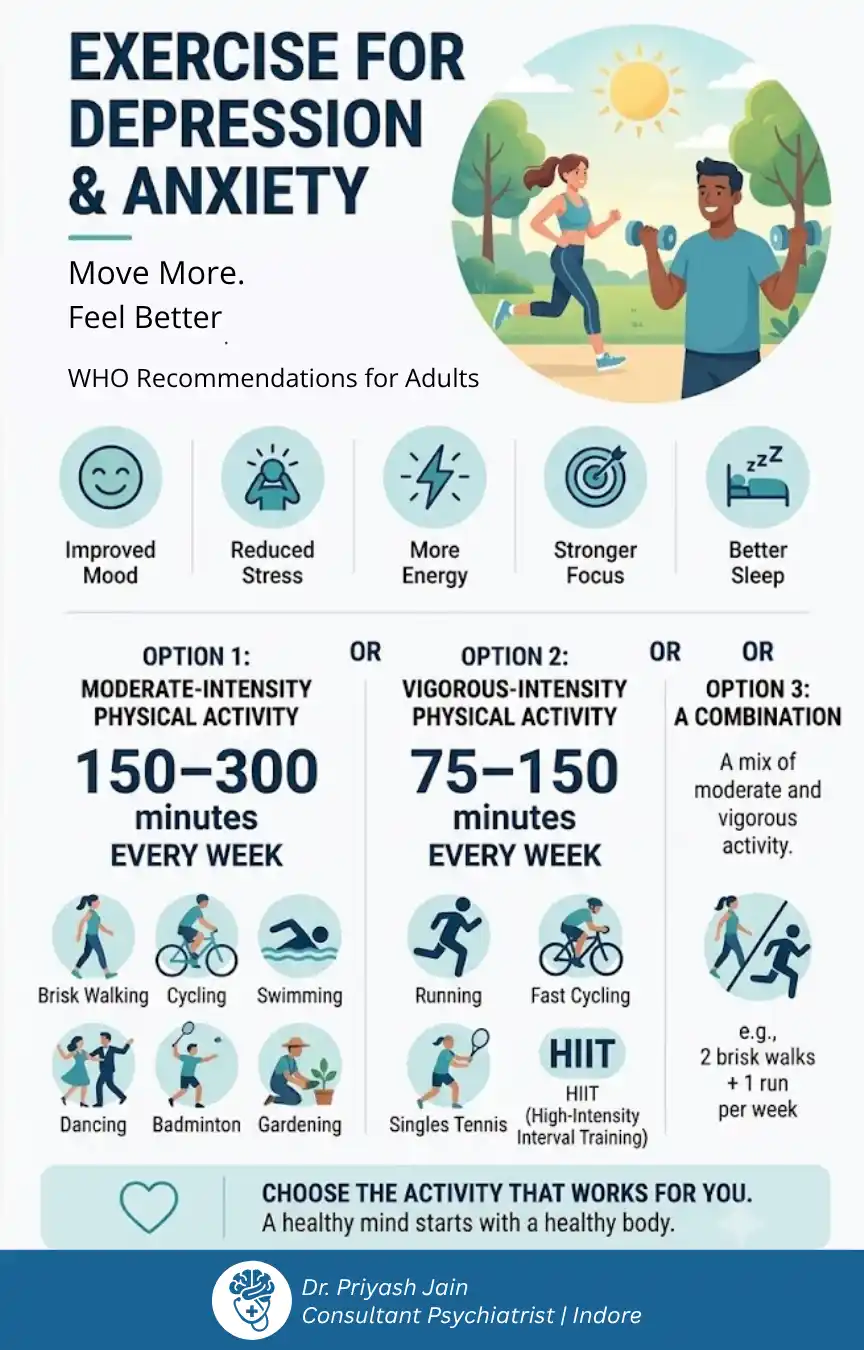
What Do WHO Guidelines Recommend?
The latest recommendations from the World Health Organization for adults aged 18 to 64 years are remarkably achievable. Aim for one of these options:
Moderate-Intensity
150–300 min
per week
Brisk walking • Cycling • Swimming • Dancing • Badminton • Gardening
Vigorous-Intensity
75–150 min
per week
Running • Fast cycling • Tennis • HIIT • Fast swimming • Team sports
Combined Mix
Any Mix
Moderate + Vigorous
Combine activities that fit your lifestyle. Choose what works for you. Consistency matters most.
Add Strength Training
WHO also recommends muscle-strengthening exercises involving major muscle groups on at least 2 days per week. Examples include:
- Weight training
- Resistance bands
- Push-ups
- Squats
- Pilates
Reduce Sitting Time
WHO also emphasises that adults should:
- Limit sedentary behaviour
- Reduce prolonged sitting
- Replace sitting with physical activity of any intensity
Even light movement is better than remaining sedentary. Small amounts of activity throughout the day add up to significant mental and physical health benefits.
Which Exercise Is Best for Mental Health?
The best exercise is the one that you enjoy and can continue regularly.
Research has shown benefits with many different forms of physical activity, including:
- Walking and jogging
- Cycling
- Yoga
- Strength training
- Swimming
- Dancing
- Sports such as badminton or tennis
Walking deserves a special mention because it is simple, inexpensive and accessible to almost everyone. Even a brisk 30-minute walk can improve mood, reduce stress and increase energy levels.
Rather than searching for the "perfect" exercise, focus on finding an activity that fits your lifestyle and that you can sustain over months and years.
Practical Tips to Get Started
Start Small
Even 10–15 minutes of walking is a good beginning. Small steps lead to big changes.
Be Consistent
A short daily walk beats an ambitious plan that lasts one week. Consistency matters more than intensity.
Choose What You Enjoy
Walking, yoga, dancing, cycling or sports—pick activities you actually like doing.
Schedule It
Treat physical activity like an important appointment. Put it on your calendar.
Be Patient
Mental health benefits build gradually over weeks, not days. Trust the process.
Remember: Doing some physical activity is always better than doing none. Small, consistent steps often lead to lasting changes in both physical and mental health.
When Exercise Alone Is Not Enough
Exercise is a powerful tool for improving mental health, but it is not always enough on its own.
If you are experiencing persistent sadness, loss of interest in activities, excessive anxiety, panic attacks, poor sleep, difficulty concentrating or problems managing your work and daily responsibilities, it may be time to seek professional help.
Depression and anxiety are common medical conditions and effective treatments are available. Depending on your symptoms, treatment may include:
- Lifestyle interventions such as exercise and sleep improvement
- Psychotherapy or counselling
- Medications
- A combination of these approaches
Early treatment can improve recovery, reduce suffering and help prevent symptoms from becoming more severe.
If you are looking for depression treatment in Indore or anxiety treatment in Indore, consulting a qualified psychiatrist can help you understand your symptoms and develop a treatment plan tailored to your needs.
Remember, seeking help is not a sign of weakness. It is an important step toward recovery and better mental health.
References
- World Health Organization. WHO Guidelines on Physical Activity and Sedentary Behaviour. Geneva: WHO; 2020.
- National Institute for Health and Care Excellence (NICE): Depression in adults: treatment and management (NG222)
- Singh B, Olds T, Curtis R, et al. Effectiveness of physical activity interventions for improving depression, anxiety and distress: an overview of systematic reviews. British Journal of Sports Medicine. 2023;57(16):1049-1059.
- Noetel M, et al. Effect of exercise for depression: systematic review and network meta-analysis. BMJ. 2024;384:e075847.
Disclaimer: This article is for educational purposes and should not replace professional mental health care. If you are experiencing symptoms of depression or anxiety, please consult with a qualified psychiatrist or mental health professional for personalized assessment and treatment.
Found this article helpful? Share it!
Need Expert Psychiatric Help?
Dr. Priyash Jain is here to help. Book a consultation today and take the first step towards better mental health.