A patient walks into a cardiologist's clinic convinced they are having a heart attack. Their ECG, troponin levels, and echocardiogram all come back normal. They are referred, sometimes after months and several specialists, to a psychiatrist. This pattern is one of the most common — and most under-recognised — presentations in mental health practice: anxiety masquerading as physical illness. Studies across primary care settings consistently find that a substantial proportion of patients presenting with unexplained chest pain, breathlessness, or gastrointestinal complaints are ultimately found to have an underlying anxiety disorder rather than a primary organic cause.
As a psychiatrist in Indore, I see this scenario regularly. Understanding the biological basis of these symptoms — not just labelling them as "stress" — helps patients take the diagnosis seriously and engage with treatment instead of cycling through unnecessary investigations.
The Nervous System Doesn't Distinguish Real Threats From Perceived Ones
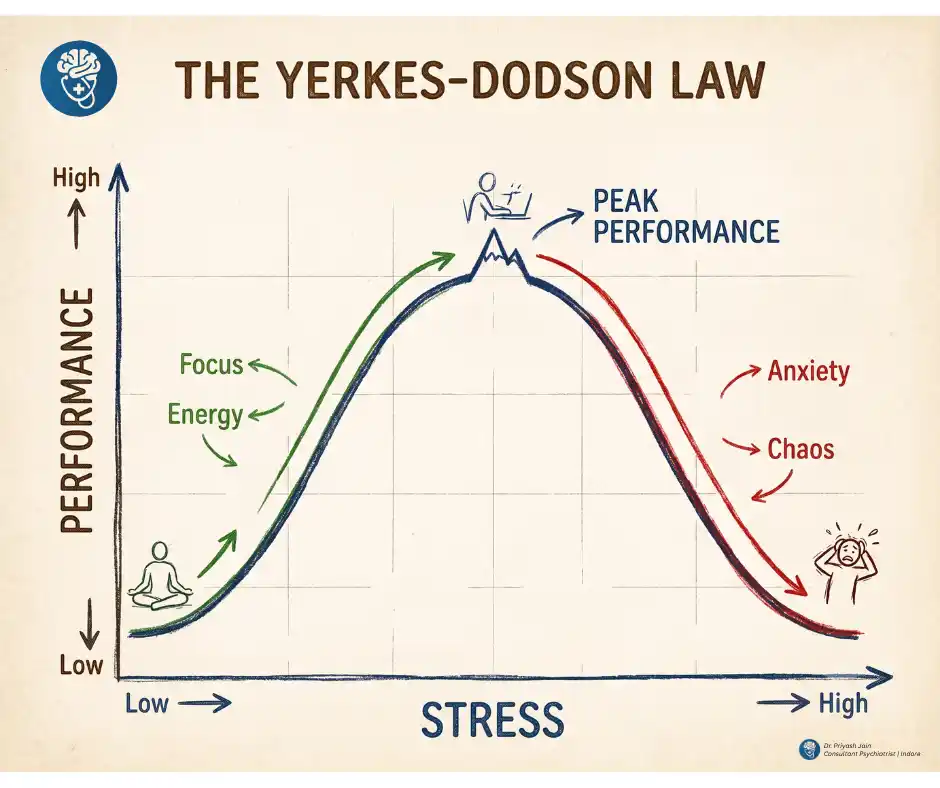
Anxiety symptoms come from the body's built-in alarm system — the "fight-flight-freeze" response. When the brain's threat-detection centre (the amygdala) senses danger, whether that's a genuine physical threat or an anxious thought about a work deadline, it signals the body to release stress hormones like cortisol and adrenaline into the bloodstream.
This response evolved to prepare the body for physical exertion: faster heart rate, redirected blood flow to large muscles, heightened alertness, and suppressed digestion. The mechanism is identical whether the trigger is a genuine emergency or an anxious thought about an exam or a difficult conversation. The body cannot tell the difference, which is precisely why psychological stress produces such convincing physical sensations.
Common Symptom Clusters and Their Physiological Basis
Heart
Palpitations, chest tightness, and a pounding heartbeat happen because adrenaline makes the heart beat faster and harder — a normal response, not a sign of heart disease.
Lungs & Breathing
Breathlessness and a choking feeling happen because the body starts breathing faster to prepare for "danger," even when there's nothing physical to run from. This fast, shallow breathing is called hyperventilation.
Stomach & Gut
Nausea, a "sinking" feeling, or an upset stomach happen because the brain and gut are closely connected by nerves. During anxiety, blood flow shifts away from digestion, which is why appetite and bowel habits often change too.
Brain & Head
Dizziness, a "foggy" or unreal feeling, and tingling in the hands or around the mouth are linked to fast breathing changing the blood flow to the brain — not a sign of anything dangerous.
The Hyperventilation-Tingling Link
One symptom scares patients more than most: tingling or numbness in the fingertips and around the mouth, often along with lightheadedness. Here's the simple explanation — when we're anxious, we tend to breathe fast and shallow, "blowing off" more carbon dioxide than usual. Even though it feels like we can't get enough air, the real issue is breathing out too much, too quickly. This temporary drop in carbon dioxide makes the nerves a little more sensitive than usual, which is what produces that tingling or pins-and-needles feeling. It looks alarming, but it settles on its own once breathing slows down — which is exactly why slow, deep breathing exercises are so effective for calming an anxiety episode.
Clinical note: Physical symptoms of anxiety are real and measurable — they are not "imagined" or "just in the mind." Dismissing them as such often delays patients from seeking the psychiatric care that can actually help.
Panic Attacks vs. Generalised Anxiety: Same Physiology, Different Patterns
Not all anxiety-related symptoms show up the same way, and the pattern often helps with diagnosis. In panic disorder, the body's alarm response is sudden and intense — symptoms peak within about ten minutes and include a racing heart, sweating, trembling, chest pain, and a frightening sense that something terrible is about to happen. Because it comes on so suddenly and feels so severe, patients often first rush to an emergency room rather than a psychiatrist, convinced they are having a heart attack or stroke.
In generalised anxiety disorder (GAD), by contrast, the same stress hormones are released at a lower level, but for much longer — sometimes for months at a stretch. This shows up differently: ongoing muscle tension, headaches, tiredness, and stomach discomfort, rather than sudden panic. Long-term stress hormone exposure in GAD also disturbs sleep and makes concentration harder, which patients often blame on overwork rather than an underlying anxiety disorder. Telling the two apart matters, because the treatment approach and choice of medication can differ between sudden panic attacks and long-running, everyday anxiety.
Ruling Out Medical Causes First
Because anxiety symptoms overlap so much with heart, hormonal, and neurological conditions, it's appropriate — and important — to have a basic medical check-up before assuming anxiety is the cause. Conditions like an overactive thyroid, irregular heart rhythms, low blood sugar, and inner-ear balance problems can feel almost identical to an anxiety episode. A psychiatric evaluation usually follows once such tests come back normal, especially when the symptoms keep recurring alongside excessive, hard-to-control worry or avoidance of everyday situations.
Evidence-Based Approaches to Treatment
Once an anxiety disorder is confirmed, management is well supported by clinical evidence:
- Talk therapy (CBT): Cognitive Behavioural Therapy helps patients stop misreading normal body sensations as danger signs (like mistaking palpitations for a heart attack), which is often what keeps the anxiety-symptom cycle going.
- Breathing and relaxation exercises: Simple techniques that slow the breath directly ease the dizziness and tingling caused by fast breathing.
- Medication: For moderate to severe anxiety, doctors commonly prescribe a class of medicines called SSRIs or SNRIs as a first choice, following Indian Psychiatric Society guidelines. Faster-acting anti-anxiety medicines (benzodiazepines) are used only briefly and carefully, since they carry a risk of dependence with long-term use.
- Understanding the "why": Simply knowing how the fight-flight response works reduces fear of the symptoms themselves in many patients. This matters most in panic disorder, where the fear of having another attack can become just as limiting as the attacks, leading people to avoid situations they see as risky.
When to Consult a Psychiatrist
If physical symptoms recur despite normal medical investigations, or coexist with persistent worry, sleep disturbance, or avoidance of daily activities, a psychiatric evaluation is warranted. At our clinic in Old Palasia, Indore, assessment typically involves a detailed history, symptom mapping, and where appropriate, a structured treatment plan combining therapy and medication tailored to the individual.
Anxiety is one of the most treatable conditions in psychiatry. Recognising its physical symptoms for what they are — a real, measurable stress response rather than a mysterious or dangerous illness — is often the first step toward recovery.
References and Sources
- National Library of Medicine (NIH). Anxiety. MedlinePlus. https://medlineplus.gov/anxiety.html
- Patient.info. Anxiety: Symptoms, Causes, and Treatments. https://patient.info/mental-health/anxiety
- Gautam S, Jain A, Gautam M, Vahia VN, Gautam A. Clinical Practice Guidelines for Management of Generalized Anxiety Disorder and Panic Disorder. Indian Journal of Psychiatry. 2017;59(Suppl 1):67–73.
Disclaimer: This article is for educational purposes and should not replace professional medical advice. If you are experiencing emotional distress or mental health concerns, please consult with a qualified healthcare professional.
Found this article helpful? Share it!
Need Expert Psychiatric Help?
Dr. Priyash Jain is here to help. Book a consultation today and take the first step towards better mental health.