Obsessive-Compulsive Disorder (OCD) is one of the most misunderstood mental health conditions. Popular culture often portrays OCD as a quirky preference for cleanliness or perfection. Phrases like “I’m so OCD” are casually used to describe someone who likes an organised desk or colour-coded wardrobe.
However, OCD is far more than a personality trait or a habit. It is a recognised mental health disorder that can significantly affect a person’s quality of life, relationships, education, and work.
Let's look at some of the most common myths about OCD and understand what the evidence actually tells us.
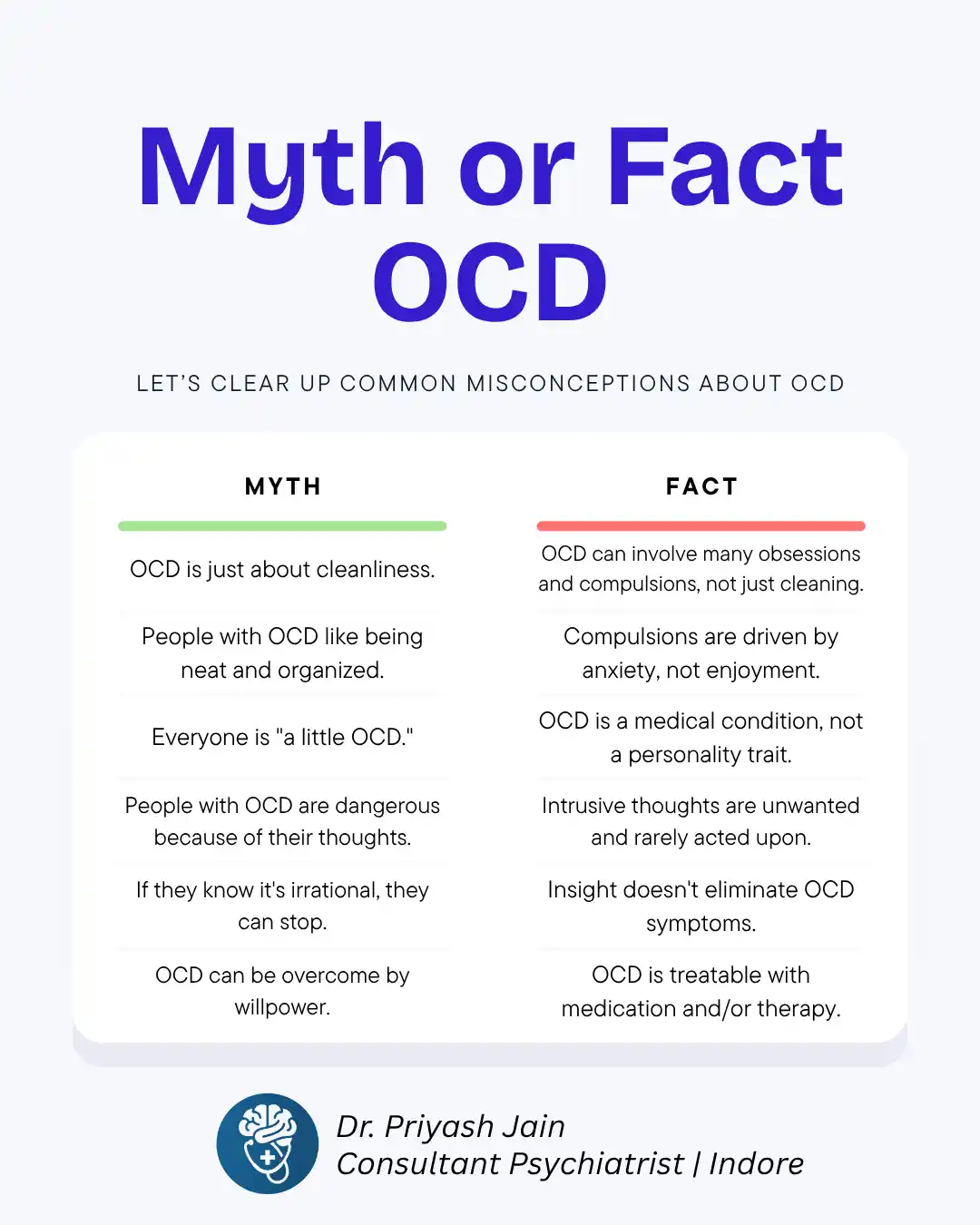
Myth 1: OCD Is Just About Cleanliness
This is probably the most widespread misconception.
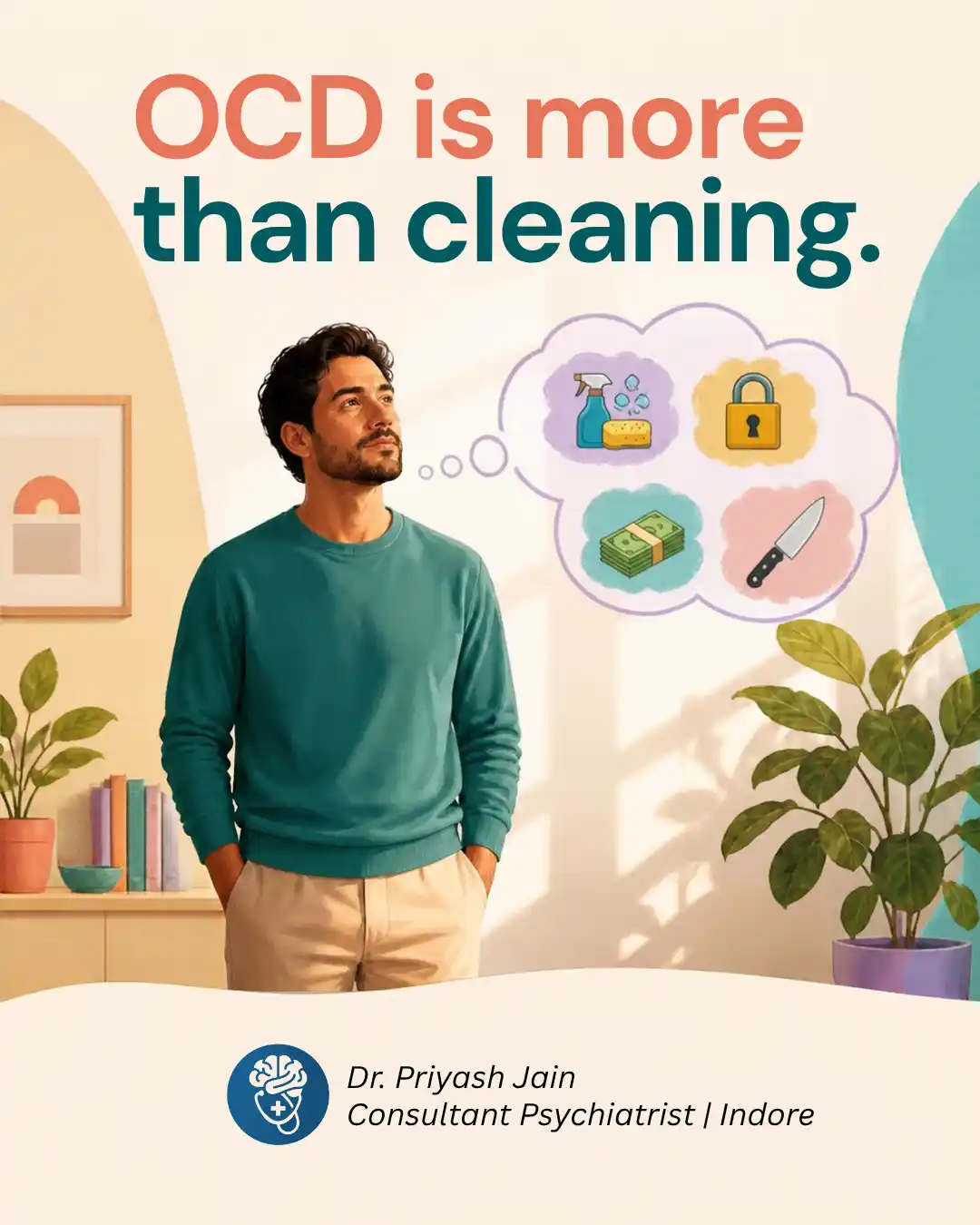
While some people with OCD have contamination fears and wash their hands repeatedly, cleanliness is only one possible manifestation of OCD.
People with OCD may also experience:
- Repeated checking of locks, switches, or appliances
- Disturbing intrusive thoughts about harming themselves or others
- Excessive need for symmetry or exactness
- Repeated doubts about everyday actions
- Religious or moral obsessions (scrupulosity)
- Unwanted sexual intrusive thoughts
Myth 2: People With OCD Enjoy Being Neat and Organised
Many people assume that someone with OCD simply likes everything to be perfect. The reality is very different.
People with OCD usually perform compulsions not because they enjoy them, but because they feel driven to reduce overwhelming anxiety.
For example, someone may repeatedly check whether the front door is locked, even though they know it probably is. The checking provides temporary relief, but the doubt soon returns, creating a cycle that is difficult to break.
Myth 3: Everyone Is “A Little OCD”
Many people prefer a tidy workspace, organised bookshelves, or carefully arranged belongings. That does not mean they have OCD.
OCD is diagnosed when obsessive thoughts and compulsive behaviours:
- Cause significant distress
- Consume a considerable amount of time
- Interfere with work, studies, relationships, or daily functioning
Myth 4: People With OCD Are Dangerous Because of Their Thoughts
One of the most distressing symptoms of OCD is the presence of intrusive thoughts. These thoughts may involve:
- Accidentally harming someone
- Acting violently
- Sexual thoughts that feel disturbing or unacceptable
- Blasphemous or religious thoughts
Because these thoughts are so distressing, many people fear they might act on them.
Myth 5: If Someone Knows Their Fears Are Irrational, They Can Simply Stop
Many people with OCD recognise that their fears are excessive or unreasonable. Unfortunately, insight alone is usually not enough.
Imagine knowing that your hands are clean but still feeling an overwhelming urge to wash them again. Or knowing you have locked the door but feeling compelled to check it repeatedly before leaving home.
This illustrates one of the defining features of OCD: the person often recognises that the thoughts are irrational, yet still feels unable to resist the compulsions because of the intense anxiety they produce.
Myth 6: OCD Can Be Cured by Willpower
OCD is not caused by weak willpower or a lack of self-control. It is a recognised psychiatric disorder with well-established, evidence-based treatments.
Treatment may include:
- Cognitive Behaviour Therapy (CBT)
- Exposure and Response Prevention (ERP), considered the gold standard psychological treatment for OCD
- Medications such as Selective Serotonin Reuptake Inhibitors (SSRIs), when indicated
- Family education and support
Many people experience significant improvement with appropriate treatment, allowing them to return to work, education, and everyday activities with much less interference from OCD.
Why Busting These Myths Matters
Misconceptions about OCD can delay diagnosis and treatment.
People often spend years believing that their symptoms are simply part of their personality or fearing that they will be judged if they talk about their intrusive thoughts. This can lead to unnecessary suffering and worsening symptoms.
Greater awareness helps people recognise that OCD is a medical condition, not a character flaw. Early intervention can reduce distress, improve functioning, and enhance quality of life.
When Should You Seek Professional Help?
Consider consulting a psychiatrist if you or someone close to you experiences:
Signs It's Time to Seek Help
- ✓ Recurrent intrusive thoughts that are distressing or difficult to control
- ✓ Repetitive behaviours performed to reduce anxiety
- ✓ Symptoms that consume a significant amount of time each day
- ✓ Obsessions or compulsions that interfere with work, studies, relationships, or daily activities
If you would like to learn more about symptoms, causes, diagnosis, and treatment, you can also explore our comprehensive guide on Obsessive-Compulsive Disorder (OCD).
Final Thoughts
OCD is far more than a preference for cleanliness or organisation. It is a complex but highly treatable mental health condition that affects millions of people worldwide.
By replacing myths with accurate information, we can reduce stigma, encourage open conversations, and help more people seek treatment without fear or embarrassment.
Understanding OCD is not just about correcting misconceptions. It is about recognising the challenges faced by those living with the condition and ensuring they receive the support and care they deserve.
References and Sources
- National Institute of Mental Health. Obsessive-Compulsive Disorder: When Unwanted Thoughts or Repetitive Behaviors Take Over. https://www.nimh.nih.gov/health/publications/obsessive-compulsive-disorder-when-unwanted-thoughts-or-repetitive-behaviors-take-over
- Stanford Medicine. Understanding OCD. https://med.stanford.edu/ocd/about/understanding.html
- Mayo Clinic. Obsessive-Compulsive Disorder (OCD) — Symptoms and Causes. https://www.mayoclinic.org/diseases-conditions/obsessive-compulsive-disorder/symptoms-causes/syc-20354432
Disclaimer: This article is for educational purposes and should not replace professional medical advice. If you or someone you know is struggling with intrusive thoughts or compulsive behaviours, please consult with a qualified healthcare professional.
Found this article helpful? Share it!
Need Expert Psychiatric Help?
Dr. Priyash Jain is here to help. Book a consultation today and take the first step towards better mental health.