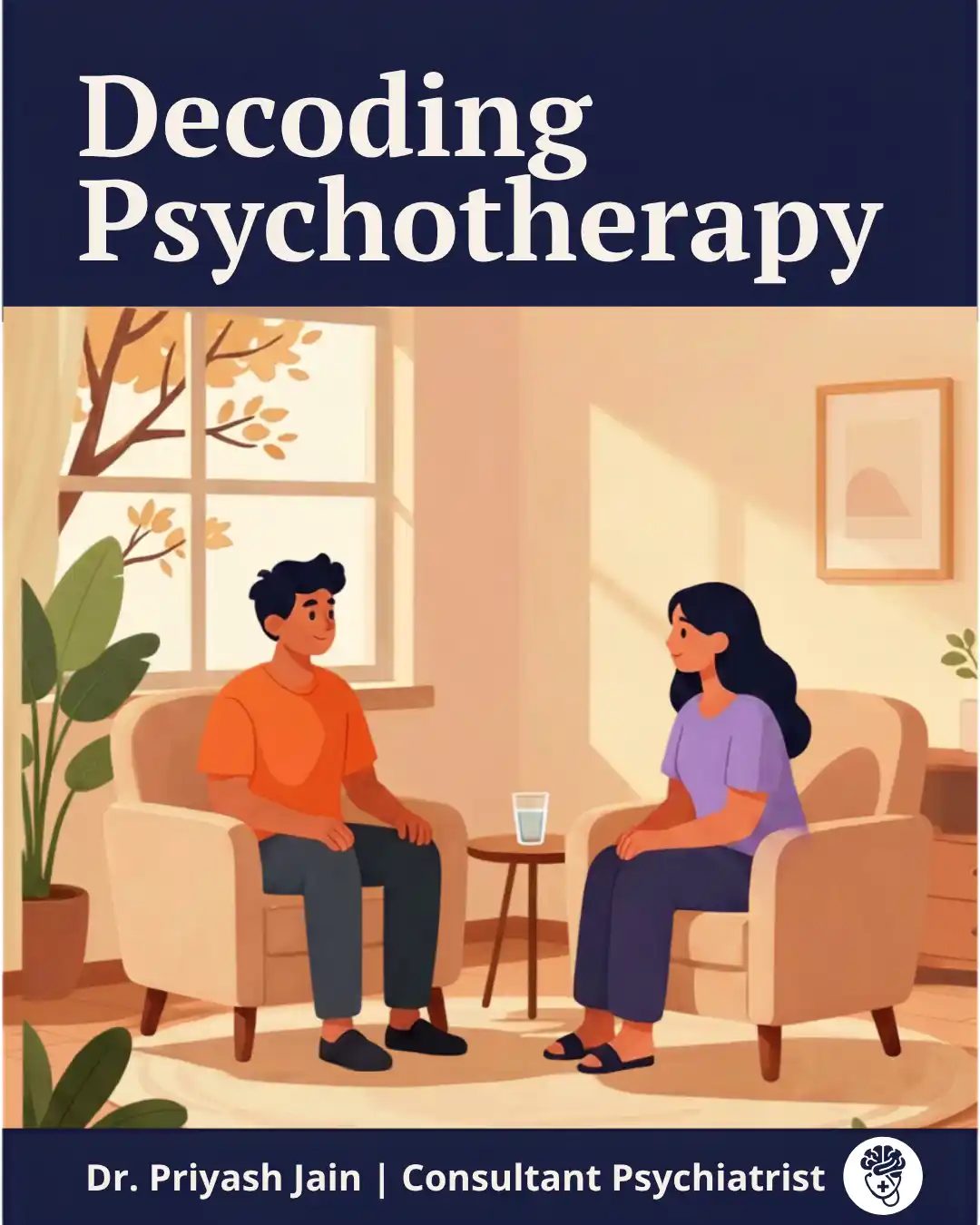
When people hear the word psychotherapy, many imagine simply talking about their problems. Others assume it is the same as counselling. In reality, psychotherapy is much more than having a conversation. It is a structured, evidence-based treatment that helps people understand their thoughts, emotions, and behaviours while developing healthier ways of coping with life's challenges.
Whether someone is experiencing anxiety, depression, obsessive-compulsive disorder (OCD), relationship difficulties, or emotional distress, psychotherapy can play an important role in recovery. But with several different types of therapy available, a common question is: Which psychotherapy is right for me?
What Is Psychotherapy?
Psychotherapy, often referred to as talk therapy, is a collaborative treatment between a trained mental health professional and an individual seeking help. It involves structured sessions designed to address emotional difficulties, mental health disorders, and behavioural problems.
The goal of psychotherapy is not simply to offer advice. Instead, it helps people:
- Understand their thoughts, emotions, and behaviours
- Develop healthier coping strategies
- Improve relationships and communication
- Learn practical skills to manage stress and emotional distress
- Reduce symptoms of mental health conditions
Is Psychotherapy the Same as Counselling?
Although the two terms are often used interchangeably, they are not exactly the same.
Counselling generally focuses on helping people cope with specific life challenges, such as relationship problems, grief, workplace stress, or major life transitions. It is often shorter in duration and aims to improve coping and problem-solving.
Psychotherapy, on the other hand, is usually a more structured and comprehensive treatment. It explores deeper emotional patterns and is commonly used to treat diagnosed mental health conditions as well as long-standing psychological difficulties.
What Are the Different Types of Psychotherapy?
There is no single psychotherapy that works for everyone. Different therapies have been developed for different conditions and treatment goals. Some of the most commonly used approaches include:
Cognitive Behaviour Therapy (CBT)
CBT helps individuals identify and modify unhelpful patterns of thinking and behaviour. It is one of the most extensively researched forms of psychotherapy and is effective for conditions such as anxiety disorders, depression, OCD, panic disorder, and insomnia.
Interpersonal Therapy (IPT)
IPT focuses on improving interpersonal relationships and communication. It is particularly useful when emotional difficulties are linked to grief, relationship conflicts, role transitions, or social isolation.
Dialectical Behaviour Therapy (DBT)
Originally developed for people with significant emotional dysregulation, DBT teaches skills related to emotional regulation, distress tolerance, mindfulness, and interpersonal effectiveness.
Psychodynamic Psychotherapy
This approach explores how unconscious thoughts, past experiences, and relationship patterns influence present-day emotions and behaviour. It aims to improve self-awareness and facilitate lasting psychological change.
Family and Couple Therapy
Sometimes emotional difficulties affect not only the individual but also their relationships. Family and couple therapy focuses on improving communication, resolving conflicts, and strengthening relationships.
Looking for psychotherapy services? Learn more about the psychotherapy services available at our clinic and how different therapeutic approaches can be tailored to your individual needs.
How Do I Know Which Therapy Is Right for Me?
One of the biggest misconceptions is that people need to choose a therapy themselves before seeking help.
The choice of therapy depends on several factors, including:
Factors That Guide the Choice of Therapy
- ✓ Your symptoms and diagnosis
- ✓ The severity and duration of your difficulties
- ✓ Your treatment goals
- ✓ Your personality and preferences
- ✓ The scientific evidence supporting a particular therapy for your condition
For example, CBT is often recommended for OCD and anxiety disorders because of its strong evidence base, while IPT may be more suitable for certain individuals with depression related to interpersonal difficulties.
Following a comprehensive psychiatric assessment, your psychiatrist or therapist will recommend the approach that is most appropriate for your situation.
Final Thoughts
Psychotherapy is not simply about talking. It is a structured, collaborative, and evidence-based treatment that can help people better understand themselves, manage emotional difficulties, and improve their quality of life.
There is no universally “best” therapy. The most effective approach is the one that matches your individual needs and is delivered by a trained mental health professional. Seeking help is the first step, and you do not have to navigate the choice of therapy alone.
If you are experiencing persistent emotional distress, anxiety, depression, OCD, relationship difficulties, or other mental health concerns, consulting a psychiatrist can help determine whether psychotherapy, medication, or a combination of both is the most appropriate treatment for you.
References and Sources
- American Psychological Association. Understanding Psychotherapy and How It Works. APA Topics. https://www.apa.org/topics/psychotherapy
- National Institute of Mental Health. Psychotherapies. NIMH Health Topics. https://www.nimh.nih.gov/health/topics/psychotherapies
- Mayo Clinic. Cognitive Behavioral Therapy — Overview. https://www.mayoclinic.org/tests-procedures/cognitive-behavioral-therapy/about/pac-20384610
Disclaimer: This article is for educational purposes and should not replace professional medical advice. If you are experiencing emotional distress or mental health concerns, please consult with a qualified healthcare professional.
Found this article helpful? Share it!
Need Expert Psychiatric Help?
Dr. Priyash Jain is here to help. Book a consultation today and take the first step towards better mental health.