Medication non-compliance is one of the biggest challenges in schizophrenia management. But stopping medicines isn't about stubbornness—it's a complex clinical issue where family support directly impacts patient outcomes. In Indore, families play a critical role in long-term psychiatric care.
Why Do Patients Stop Medicines?
Several interconnected reasons drive treatment non-compliance:
Lack of Insight (Anosognosia)
Patients may genuinely not believe they're unwell—this isn't denial but part of the illness itself. They feel "I don't need medicines." When someone does not believe they are ill, continuing treatment can feel irrational or forced from their perspective.
Distressing Side Effects
Antipsychotics cause weight gain, sedation, tremors, and reduced motivation. Many patients secretly stop treatment rather than report side effects to their doctor, fearing dismissal or misunderstanding.
Feeling "Cured"
Once symptoms improve, patients believe medication is no longer needed. Unfortunately, schizophrenia requires sustained treatment to prevent relapse. This misunderstanding is one of the most common reasons for stopping medicines prematurely.
Stigma and Family Conflict
Social stigma and critical family responses reduce treatment adherence. Low family support directly predicts worse outcomes. High expressed emotion—defined as criticism, hostility, or emotional over-involvement from caregivers—significantly increases relapse risk.[2]
Cognitive Difficulties
Memory problems and disorganization make consistent pill-taking difficult—especially without structured support from family or healthcare providers.
How Family Environment Affects Treatment Compliance
Key Finding: Research demonstrates that patients returning to high expressed emotion family environments experience significantly higher relapse rates compared to supportive families. This relationship is robust across cultures and populations, including South Asian families.[2]
Research from caregiver burden studies shows that as caregivers' stress increases, patient compliance deteriorates. However, the reverse is also true: structured family support improves medication adherence.
Family psychoeducation—where caregivers understand the illness, recognize early warning signs, and adopt supportive (rather than critical) responses—measurably reduces relapse risk.
Evidence from Recent Research: The Profamille psychoeducation program, tested with nearly 2,000 family members across multiple centers, showed that after the intervention, patient compliance improved significantly (p<0.000001) and suicide attempt risk fell by 50%.[1] This demonstrates the powerful impact of structured family involvement in treatment.
How Families Can Support Treatment Compliance
1. Build Collaborative Relationships
Listen without judgment. Discuss side effects openly. Patients continue treatment when respected, not controlled or pressured.
2. Understand the Illness
Learn what schizophrenia is, expected treatment duration, and early warning signs. Knowledge reduces fear and improves family responses to the patient's behavior.
3. Address Side Effects
Many side effects can be managed—dose adjustments, medication switches, or lifestyle changes. Encourage open communication with the psychiatrist rather than silent non-compliance.
4. Create Structure
Pill organizers, phone reminders, fixed medication times, and gentle supervision improve consistency and help patients with cognitive symptoms.
5. Reduce Stigma
Treat mental illness like diabetes or hypertension—a chronic medical condition requiring ongoing care, not a character flaw or sign of weakness.
6. Seek Professional Support
Family psychoeducation programs directly improve outcomes. Professional guidance helps families navigate the illness effectively and reduce caregiver burden.
The Cost of Stopping Medicines
Non-compliance significantly increases risk of:
- Return of hallucinations and delusions
- Increased suspicion and paranoia
- Aggression or agitation
- Social withdrawal and functional decline
- Hospitalization and loss of employment
Repeated relapses make future recovery harder. Early intervention and consistent family support can prevent these outcomes.
Recovery Is Possible With Family Involvement
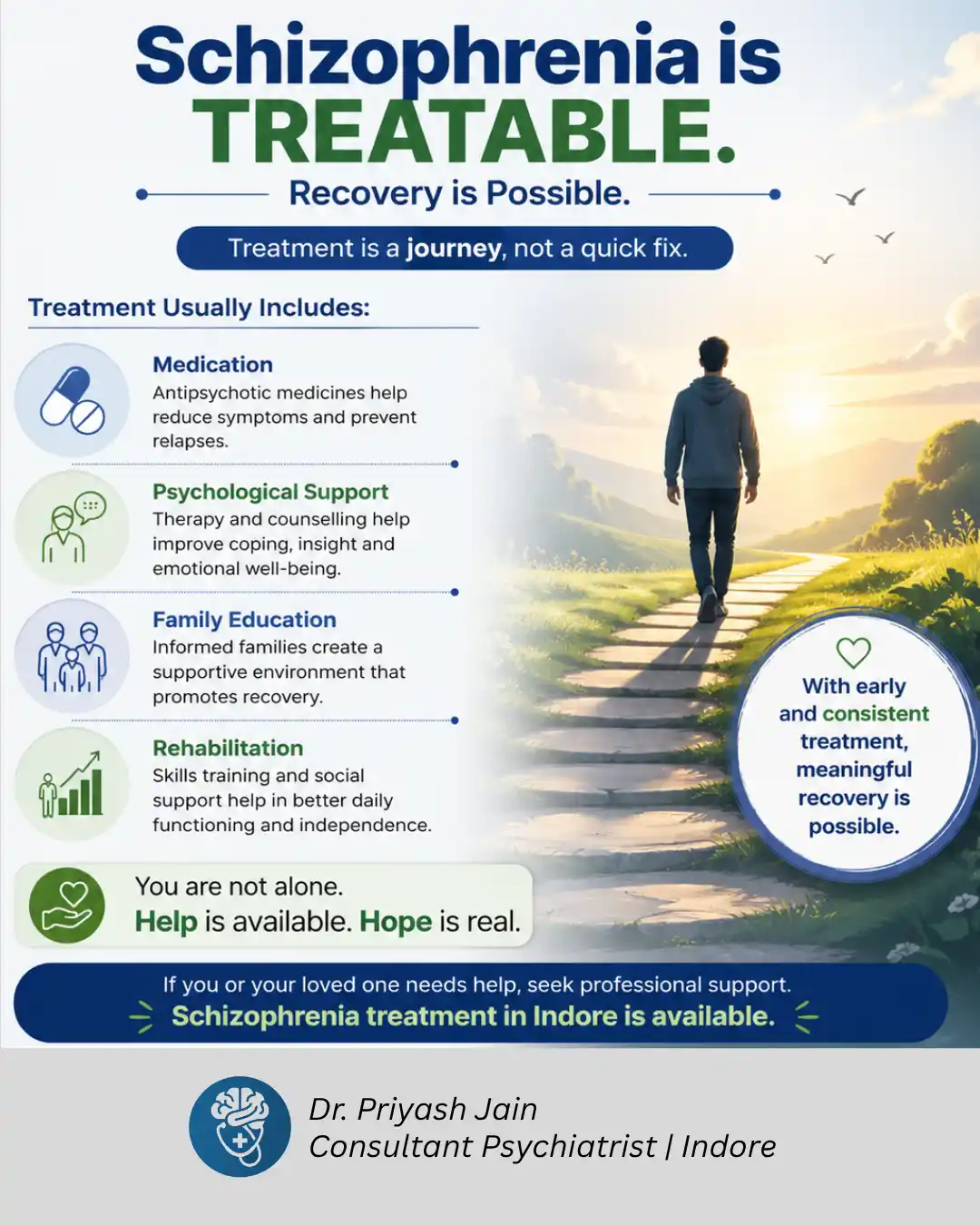
Schizophrenia treatment isn't just about medications—it's about quality of life, meaningful relationships, and functional recovery.
Many people with schizophrenia improve substantially with consistent treatment and family support. In Indore, where family-centered care is deeply valued, structured family involvement in treatment can make the difference between relapse and sustained recovery.
If you or a loved one is struggling with treatment adherence or managing schizophrenia symptoms, professional psychiatric care combined with family psychoeducation offers evidence-based hope.
Early intervention, family involvement, and regular follow-up improve outcomes significantly.
Key Takeaway
Treatment non-compliance in schizophrenia is not a choice or character flaw—it's a complex clinical challenge with multiple contributing factors. Family understanding, professional support, and collaborative care significantly improve outcomes and reduce relapse risk.
References
- Hode Y, Padovani R, et al. (2024). Family psychoeducation in schizophrenia and schizophrenia related disorder, treatment compliance, and suicidal risk reduction. Frontiers in Psychiatry, 15:1370566. doi: 10.3389/fpsyt.2024.1370566
- Brown G, Birley J, Wing J. (1972). Influence of family life on the course of schizophrenia disorders: A replication. British Journal of Psychiatry, 121:241-58.
- Lancet Psychiatry. (2022). Family interventions for relapse prevention in schizophrenia: A systematic review and network meta-analysis. PIIS2215-0366(21)00437-5
- Pitschel-Walz G, et al. (2001). The effect of family interventions on relapse and rehospitalization in schizophrenia—A meta-analysis. Journal of Clinical Psychiatry, 62(12):992-1002.
Disclaimer: This article is for educational purposes and should not replace professional medical advice. If you have schizophrenia or are struggling with medication adherence, please consult with a qualified psychiatrist or mental health professional.
Found this article helpful? Share it!
Need Expert Psychiatric Help?
Dr. Priyash Jain is here to help. Book a consultation today and take the first step towards better mental health.