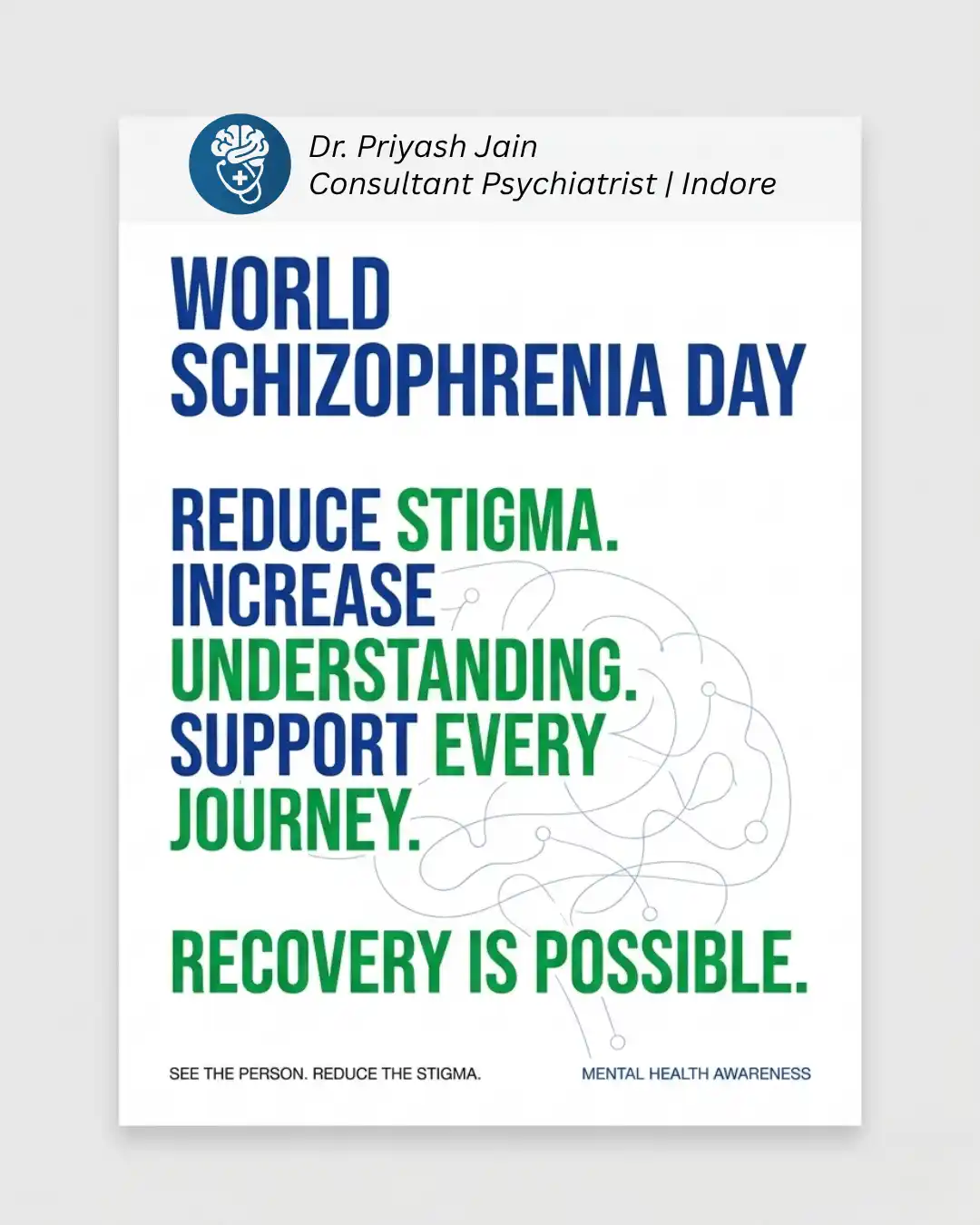
On the occasion of World Schizophrenia Day, conversations around psychosis and schizophrenia become especially important. Despite growing awareness, many families still struggle to recognise the early signs of psychosis or know how to respond when a loved one begins behaving differently.
As a psychiatrist practicing in Indore, Dr. Priyash Jain frequently works with individuals and families navigating psychosis, schizophrenia, severe suspiciousness, hallucinations, and behavioural disturbances. One of the most common experiences families describe is uncertainty: "We did not know what was happening or what we should do."
Recognise the Early Signs of Psychosis
Psychosis is a condition in which a person loses touch with reality. It can occur in illnesses such as schizophrenia, severe mood disorders, substance-related conditions, or certain medical disorders.
Families may notice:
- Increasing suspiciousness or paranoia
- Hearing voices or responding to unseen stimuli
- Strong false beliefs that do not match reality
- Social withdrawal and isolation
- Disturbed sleep
- Decline in work, studies, or self-care
- Disorganised speech or unusual behaviour
Sometimes these symptoms develop gradually and may initially be mistaken for stress, personality changes, or substance use. Early psychiatric intervention is important because delayed treatment is associated with poorer long-term outcomes.
Stay Calm and Avoid Arguing
One of the most important things families can do is remain calm. To the person experiencing psychosis, hallucinations and delusions often feel completely real. Directly arguing, mocking, or trying to "prove them wrong" may increase distress and mistrust.
This does not mean agreeing with the delusion. It means responding with empathy while gently encouraging professional help. Mental health organisations such as NAMI emphasise supportive, non-confrontational communication when someone is experiencing psychosis.[1]
Encourage Professional Help Early
Psychosis requires psychiatric assessment. Early treatment is associated with better symptom control, improved functioning, and reduced risk of relapse. Encourage the person to consult a psychiatrist in a calm and non-threatening way. Avoid using labels such as "crazy" or "mad," which may worsen stigma and resistance to treatment.
In some cases, the individual may not believe they are unwell. This reduced insight is common in psychotic disorders and can be one of the most difficult aspects for families to understand.
Prioritise Safety During a Crisis
Most individuals with psychosis are not violent, but severe agitation, confusion, fear, or impulsive behaviour can sometimes create unsafe situations.
- Is threatening harm to self or others
- Becomes severely agitated or aggressive
- Stops eating or drinking
- Is unable to care for themselves
- Appears highly confused or fearful
- Is wandering or behaving dangerously
During acute distress: keep the environment calm and quiet, reduce overstimulation, avoid crowding or shouting, speak slowly and clearly, and do not aggressively challenge delusional beliefs. If there is immediate danger, emergency services or urgent psychiatric care may be necessary.
Avoid Shame, Ridicule, or Punishment
In many Indian families, psychotic symptoms may initially be interpreted as attention-seeking, weakness, spiritual causes, or "bad behaviour." While cultural and spiritual beliefs are important to many families, delaying psychiatric treatment can worsen outcomes. Supportive family involvement remains one of the strongest protective factors in recovery from schizophrenia and related psychotic disorders.
Take Care of the Caregiver Too
Caring for someone with psychosis can be emotionally exhausting. Families often experience guilt, frustration, burnout, social stigma, and financial stress. Caregivers should also seek support, maintain routines, and avoid carrying the burden alone. Psychoeducation and family counselling can help relatives understand the illness, recognise early warning signs of relapse, and communicate more effectively.
Recovery Is Possible
World Schizophrenia Day is an important reminder that psychosis and schizophrenia are medical conditions, not personal failures. With proper treatment, many individuals are able to continue education, employment, relationships, and independent living.
Treatment may include:
- Antipsychotic medications
- Psychological support
- Rehabilitation services
- Family psychoeducation
- Relapse prevention strategies
Awareness regarding schizophrenia treatment and psychosis care in Indore is gradually improving, and more families are seeking early psychiatric help without hesitation. If someone in your family is showing signs of psychosis, early consultation with a psychiatrist can help clarify the diagnosis, reduce distress, and improve long-term recovery outcomes.
References and Sources
- National Alliance on Mental Illness (NAMI). Supporting recovery: Family members and caregivers. https://www.nami.org/family-members-and-caregivers/supporting-recovery/
- National Institute for Health and Care Excellence (NICE). (2014). Psychosis and schizophrenia in adults: Prevention and management. Clinical Guideline CG178. https://www.nice.org.uk/guidance/CG178/
Disclaimer: This article is for educational purposes and should not replace professional medical advice. If a family member is showing signs of psychosis, please consult a qualified psychiatrist or mental health professional promptly.
Found this article helpful? Share it!
Need Expert Psychiatric Help?
Dr. Priyash Jain is here to help. Book a consultation today and take the first step towards better mental health.