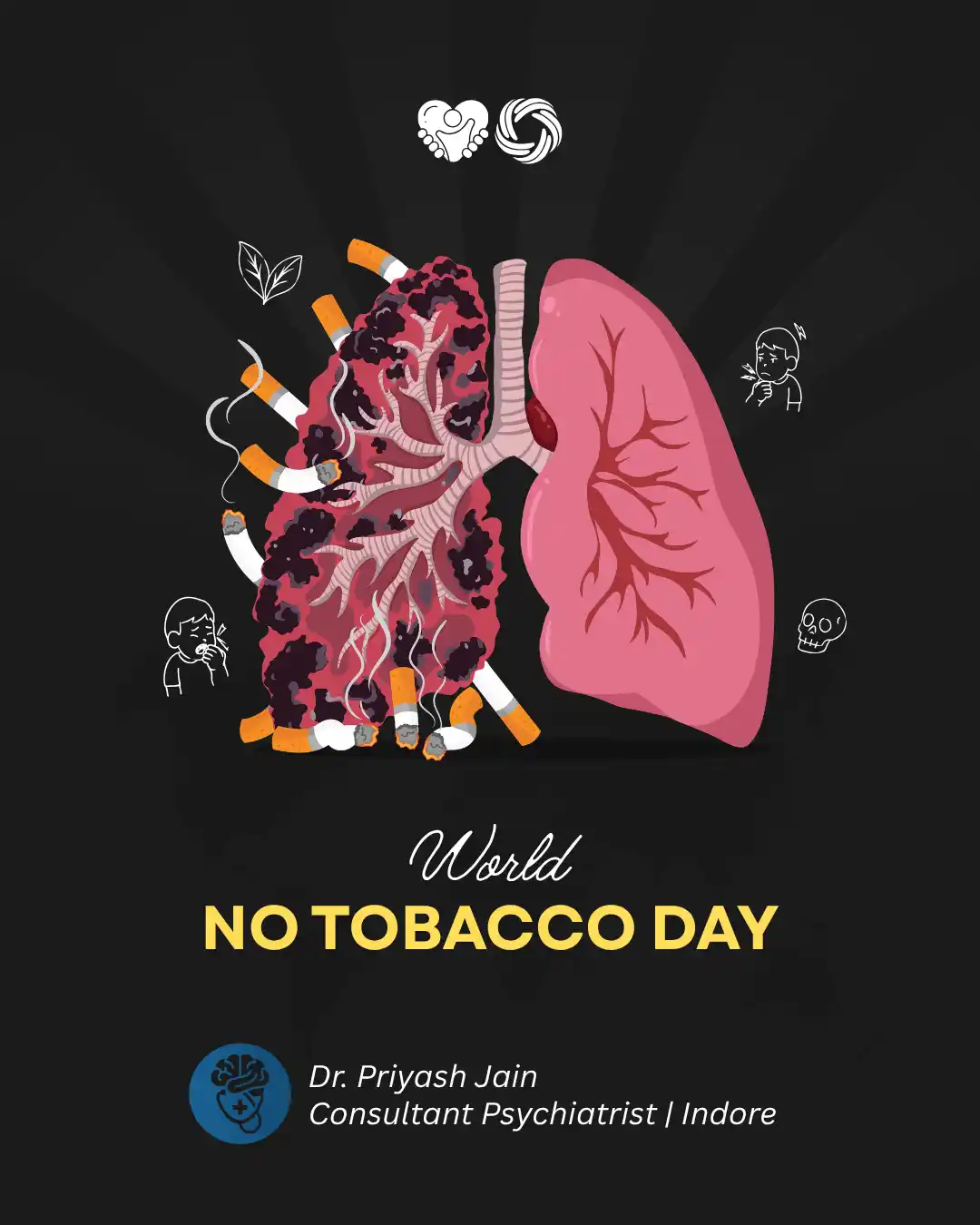
World No Tobacco Day, observed on May 31st each year, highlights the global epidemic of tobacco use and its devastating impact on public health. Smoking remains one of the leading causes of preventable death worldwide. Beyond the well-known physical consequences, smoking profoundly affects mental health and cognitive function. Understanding the interconnected relationship between nicotine use, mental health, and the pathways to successful cessation is critical for anyone attempting to quit.
Smoking's Wide-Ranging Impact on Health
Smoking causes damage far beyond the lungs. The health consequences include:
Physical Health Risks
- Lung disease and chronic obstructive pulmonary disease (COPD)
- Heart disease and hypertension
- Stroke and vascular disease
- Increased risk of multiple cancers (lung, throat, bladder, pancreas)
- Weakened immune system
Mental Health Impact
Smoking doesn't just affect the body, it significantly impacts psychological well-being. While some smokers initially feel that cigarettes calm anxiety, the reality is more complex. Smoking actually:
- Increases anxiety and panic symptoms over time
- Worsens irritability and mood instability
- Disrupts sleep architecture, causing insomnia and poor sleep quality
- Impairs cognitive function and concentration
- Increases depression and emotional dysregulation
This paradox—temporary relief followed by worsening symptoms creates a vicious cycle that keeps people smoking despite wanting to quit.
Why Quitting Smoking Is Difficult: The Nicotine-Brain Connection
Key Finding: Nicotine is a powerful psychoactive drug that affects multiple neurotransmitter systems in the brain, including dopamine, serotonin, and acetylcholine. When smoked, nicotine reaches the brain within seconds, creating rapid reinforcement that drives addiction.[1]
The Dependence Cycle
- Nicotine releases dopamine, creating a reward response
- The brain adapts by reducing its natural dopamine production
- Smokers require increasingly frequent cigarettes to maintain baseline dopamine levels
- Quitting triggers withdrawal symptoms: irritability, anxiety, cravings, and difficulty concentrating
- Without proper support, relapse becomes highly likely
Why Willpower Alone Isn't Enough: Nicotine dependence is a medical condition requiring professional intervention. Recent neuroscience shows that nicotine produces rewarding effects through integrated actions of dopaminergic, GABAergic, and glutamatergic systems simultaneously, making rapid addiction inevitable.[1] This neurobiological mechanism explains why nicotine dependence is not a moral failing or lack of discipline. It is a complex brain change requiring evidence-based treatment.
Smoking's Complex Relationship With Anxiety and Depression
Interestingly, many people with anxiety or depression smoke to manage their symptoms. However, research shows this provides only temporary relief while worsening the underlying condition long-term.
The Anxiety Paradox
Smokers report that cigarettes reduce anxiety, but nicotine actually increases heart rate, blood pressure, and physiological arousal; all markers of anxiety. The perceived calming effect comes from relief of nicotine withdrawal, not genuine anxiety reduction.
Depression and Smoking
People with depression are significantly more likely to smoke. A systematic review of 148 longitudinal studies found that individuals with depression and anxiety account for nearly 40% of all cigarettes consumed in developed nations, despite representing a much smaller portion of the population.[3] Smoking provides short-term mood elevation through dopamine release, but worsens depression over time through sleep disruption, reduced physical activity, and social isolation.
Important Note: Understanding this relationship is crucial. Quitting smoking often improves mental health outcomes more significantly than medication alone. The longer the duration of smoking cessation, the lower the risk of depression and anxiety symptoms.[3]
Effective Treatment Options for Smoking Cessation
The good news: Effective, evidence-based treatment exists. Successful quitting combines multiple approaches:
Behavioral Support
- Psychotherapy addresses smoking triggers and teaches coping strategies
- Assessment and treatment of underlying anxiety or depression driving nicotine use
- Support groups provide accountability and shared experience
- Structured quit plans increase success rates significantly
Medications: Evidence-Based Options
Recent meta-analysis from the American Heart Association shows clear effectiveness hierarchy for smoking cessation medications:[2]
- Varenicline: Very effective - reduces both cravings and the rewarding effects of nicotine.
- Bupropion: Very effective antidepressant that reduces cravings and addresses co-occurring depression.
- Nicotine Replacement Therapy (NRT): Patches, gum, and lozenges reduce cravings and withdrawal symptoms
- Combination Therapy: Behavioral support + medication shows superior outcomes to either approach alone. Combined varenicline + bupropion shows even higher success rates.
Why Early Intervention Matters
Starting cessation treatment immediately increases success rates significantly. Research shows that continuous abstinence rates reach higher when medicine is combined with psychotherapy in clinical settings.[2] Longer smoking duration and higher daily cigarette consumption predict lower quit rates without intervention.
The Role of Mental Health Professionals
Psychiatrists and counselors play a critical role in:
- Assessing co-occurring anxiety or depression
- Selecting appropriate pharmacotherapy
- Managing withdrawal symptoms
- Providing ongoing psychological support
- Preventing relapse through structured follow-up
What to Expect When Quitting
Quitting smoking is challenging but achievable. Withdrawal typically peaks within the first 3-5 days, then gradually decreases over weeks.
Common Withdrawal Symptoms
- Intense cravings
- Irritability and mood swings
- Difficulty concentrating
- Sleep disturbance
Success Factors
- Having a specific quit date
- Removing triggers and temptations from your environment
- Enlisting social support from family and friends
- Using medication and counseling as recommended
- Planning for high-risk situations in advance
- Expecting setbacks without shame or self-criticism
Most successful quitters attempt multiple times before achieving lasting cessation. Each attempt provides learning and increases eventual success probability. Relapse is a common part of the cessation process, not a failure.
Professional Smoking Cessation Support Available in Indore
If you are struggling with cigarette addiction or want to quit smoking, professional help significantly improves success rates. In Indore, qualified psychiatrists and mental health professionals offer:
- Comprehensive assessment of smoking history and co-occurring mental health conditions
- Personalized cessation plans combining behavioral and pharmacological approaches
- Ongoing support through withdrawal and long-term abstinence
- Management of anxiety, depression, or other conditions driving nicotine use
- Follow-up care to prevent relapse and maintain cessation
You don't have to quit alone. Professional guidance provides structured support, evidence-based strategies, and accountability which are the key ingredients for lasting success.
Key Takeaway
Smoking is a treatable medical condition, not a character flaw. The integration of mental health care with smoking cessation dramatically improves outcomes. Nicotine dependence involves measurable brain changes that respond to evidence-based treatment. Early intervention, professional support, and combined behavioral-pharmacological approaches significantly increase success rates.
Breaking Free: Your Path to Better Health
On World No Tobacco Day and beyond, remember: quitting is possible, and every cigarette not smoked protects your physical and mental health.
If you're ready to quit, reaching out today is the first step toward better health, clearer thinking, and improved emotional well-being. The evidence is clear: combined treatment approaches work, mental health support is critical, and recovery is within reach.
References
- Exley R, Clements MA, Hartung H, McIntosh JM, Cragg SJ. (2008). Neurobiology of nicotine addiction: implications for smoking cessation treatment. Nature Reviews Neuroscience. Explains nicotinic acetylcholine receptors and dopamine system involvement in addiction.
- American Heart Association. (2016). Network meta-analysis on efficacy and safety of smoking cessation interventions. Demonstrates varenicline (RR: 2.64) and bupropion (RR: 1.42) effectiveness compared to placebo; real-world study shows 58.3% continuous abstinence with varenicline + cognitive-behavioral therapy.
- Fluharty M, Taylor AE, Grabski M, Munafò MR. (2016). The association of cigarette smoking with depression and anxiety: A systematic review. Nicotine & Tobacco Research, 18(8). Systematic review of 148 longitudinal studies showing bidirectional relationship between smoking and mental health conditions.
- NIDA (National Institute on Drug Abuse). What are treatments for tobacco dependence? Government authority on FDA-approved pharmacotherapies (nicotine replacement therapy, bupropion, varenicline) and evidence-based behavioral interventions.
Disclaimer: This article is for educational purposes and should not replace professional medical advice. If you have nicotine dependence or are struggling with smoking cessation, please consult with a qualified psychiatrist or mental health professional for personalized treatment.
Found this article helpful? Share it!
Need Expert Psychiatric Help?
Dr. Priyash Jain is here to help. Book a consultation today and take the first step towards better mental health.