Sleep hygiene refers to a set of evidence-based habits and environmental practices that improve both sleep quality and sleep consistency.[1] Unlike medication-based approaches, sleep hygiene focuses on behavioral and environmental modifications that help your brain naturally shift into restorative sleep.
Research from the American Academy of Sleep Medicine demonstrates that consistent sleep hygiene practices can significantly improve sleep quality without medication.[2] Good sleep hygiene includes:
- Maintaining a regular sleep schedule
- Creating a bedroom environment that supports uninterrupted sleep
- Following a calming bedtime routine
- Managing caffeine, alcohol, nicotine, and screen exposure
- Developing daytime habits that support healthy sleep at night
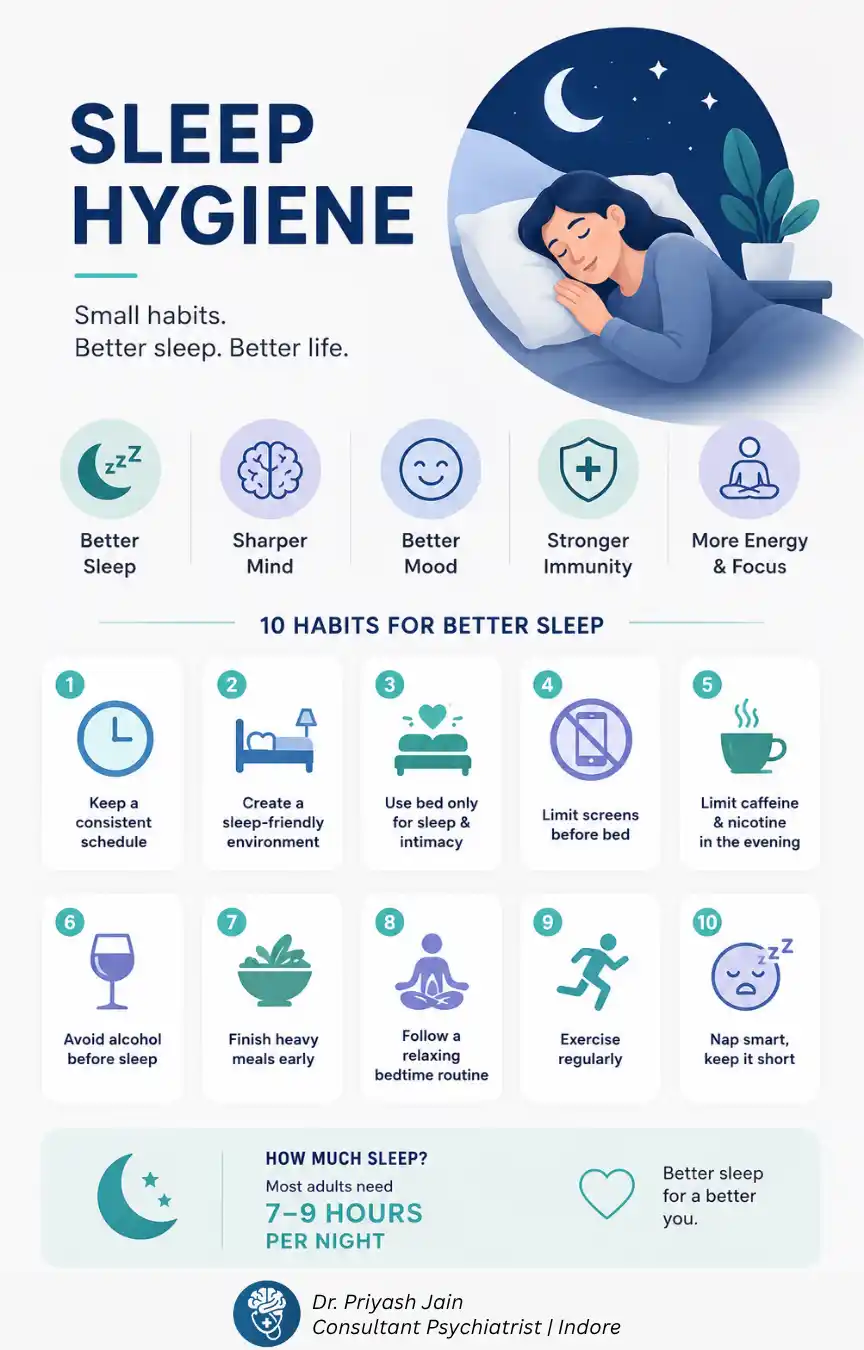
10 Evidence-Based Sleep Hygiene Tips
1. Maintain a Consistent Sleep Schedule
Your brain works on a biological clock called the circadian rhythm. Irregular sleep timing confuses this internal clock, making it harder to fall asleep and stay asleep. Consistency is the foundation of good sleep.[2]
- Go to bed at approximately the same time daily
- Wake up at the same time, including weekends when possible
- Avoid dramatic "catch-up sleep" patterns
A 2023 consensus statement from the National Sleep Foundation suggests that limited catch-up sleep on weekends may help after sleep deprivation, but consistency remains healthier overall.[4]
2. Create a Sleep-Friendly Bedroom
Your bedroom should signal "rest," not "activity." The environment you sleep in directly impacts your sleep quality.[2]
Keep the Room Cool: Most people sleep better in a slightly cool room, ideally around 18°C to 20°C (65°F to 68°F). A cool environment supports the natural drop in core body temperature that occurs during sleep onset.[1]
Reduce Noise: Use curtains and rugs to absorb sound, white noise machines, or fans and soothing ambient sounds.
Block Excess Light: Light suppresses melatonin, the hormone involved in sleep onset. Use blackout curtains, eye masks, and dim lights 1 to 2 hours before bed.[2]
Improve Comfort: Replace old mattresses or uncomfortable pillows when needed. A comfortable bed is essential for consistent, quality sleep.
3. Use the Bed Only for Sleep and Intimacy
When the bed becomes an office, cinema, or scrolling station, the brain stops associating it with sleep. This weakens the conditioned response your brain needs to fall asleep naturally.[2] Avoid working in bed, watching stressful content, or doomscrolling social media late at night.
4. Reduce Screen Exposure Before Bed
Blue light exposure from screens may delay melatonin release and increase alertness, making it harder to fall asleep.[1, 3]
- Avoid screens 30 to 60 minutes before bedtime
- Use night mode or blue-light filters if needed
- Replace scrolling with reading, breathing exercises, or calming music
5. Watch Evening Caffeine and Nicotine Intake
Caffeine can remain active in the body for several hours, interfering with sleep onset and quality.[2] Avoid tea, coffee, cola, and energy drinks after lunch or late afternoon, and be cautious with hidden caffeine in chocolate or supplements. Nicotine is also a stimulant and may worsen insomnia.
6. Be Careful With Alcohol Before Sleep
While alcohol may initially make people sleepy, it increases nighttime awakenings, worsens snoring and sleep apnea, and reduces REM sleep — which is important for emotional processing and cognition.[1, 2]
7. Finish Heavy Meals Earlier
Try to complete dinner at least 2 to 3 hours before bedtime. Large meals close to sleep may cause acid reflux, physical discomfort, and restlessness.[2] If you're hungry late at night, choose a light snack such as a banana, yogurt, or a handful of almonds.
8. Develop a Relaxing Bedtime Routine
The brain prefers a gradual wind-down period that signals the body it's time to rest. Behavioral sleep interventions, including structured bedtime routines, are evidence-based approaches recommended by sleep medicine specialists.[2]
Helpful rituals include reading in soft light, taking a warm bath, gentle stretching, deep breathing, progressive muscle relaxation, or guided meditation. Consistency matters more than complexity — choose 1–2 activities and practice them nightly for 15–30 minutes.
9. Exercise Regularly
Regular physical activity improves sleep quality and efficiency by increasing sleep pressure and reducing anxiety.[2, 3] Some people find intense exercise within 1 to 2 hours of bedtime too activating — morning or afternoon exercise often works best. Light evening yoga or walking may still help with relaxation.
10. Nap Carefully
Short naps can refresh the brain and boost afternoon productivity. However, long naps can make it harder to fall asleep at your regular bedtime.[2] Keep naps under 30 minutes and avoid late evening naps.
Quick Sleep Hygiene Checklist
- ✓ Consistent sleep schedule (same bedtime and wake time daily)
- ✓ Cool bedroom (65–68°F / 18–20°C)
- ✓ Dark and quiet environment
- ✓ Bed reserved for sleep and intimacy only
- ✓ No screens 30–60 minutes before bed
- ✓ No caffeine after afternoon
- ✓ No alcohol before sleep
- ✓ Dinner finished 2–3 hours before bed
- ✓ Relaxing bedtime routine (15–30 minutes)
- ✓ Regular exercise (not close to bedtime)
Sleep Hygiene and Related Psychiatric Conditions
Sleep disturbances are common in various psychiatric and medical conditions. Sleep hygiene improvements should be combined with appropriate treatment for conditions such as:
- Anxiety Disorders: Sleep anxiety can create a vicious cycle where worry about sleep prevents restful sleep. Combining sleep hygiene with anxiety treatment provides better outcomes.
- Depression: Sleep disturbances are a core symptom of depression. Sleep hygiene interventions support psychiatric treatment for depression.
- Stress-Related Disorders: Chronic stress disrupts sleep architecture. See our World Sleep Day article for more on stress and sleep management.
If you have any of these conditions, combining sleep hygiene with professional psychiatric care significantly improves sleep outcomes.
References and Sources
- American Academy of Sleep Medicine. (2023). Healthy sleep habits. Sleep Education. https://sleepeducation.org/healthy-sleep/healthy-sleep-habits/
- Centers for Disease Control and Prevention. (2020). Sleep and sleep disorders. NIOSH Workplace Safety and Health Topics. https://www.cdc.gov/niosh/bulletin/2020/sleep.html
- Harvard Health. (2023). Sleep hygiene: Simple practices for better rest. Harvard Health Publishing. https://www.health.harvard.edu/healthy-aging-and-longevity/sleep-hygiene-simple-practices-for-better-rest
- Consensus Conference Panel, American Academy of Sleep Medicine Foundation. (2023). Consensus statement on sleep hygiene. Sleep Health Journal, 9(3). https://www.sleephealthjournal.org/article/S2352-7218(23)00166-3/fulltext
Disclaimer: This article is for educational purposes and should not replace professional medical advice. If you have persistent sleep problems or suspect a sleep disorder, please consult with a qualified healthcare professional.
Found this article helpful? Share it!
Need Expert Psychiatric Help?
Dr. Priyash Jain is here to help. Book a consultation today and take the first step towards better mental health.